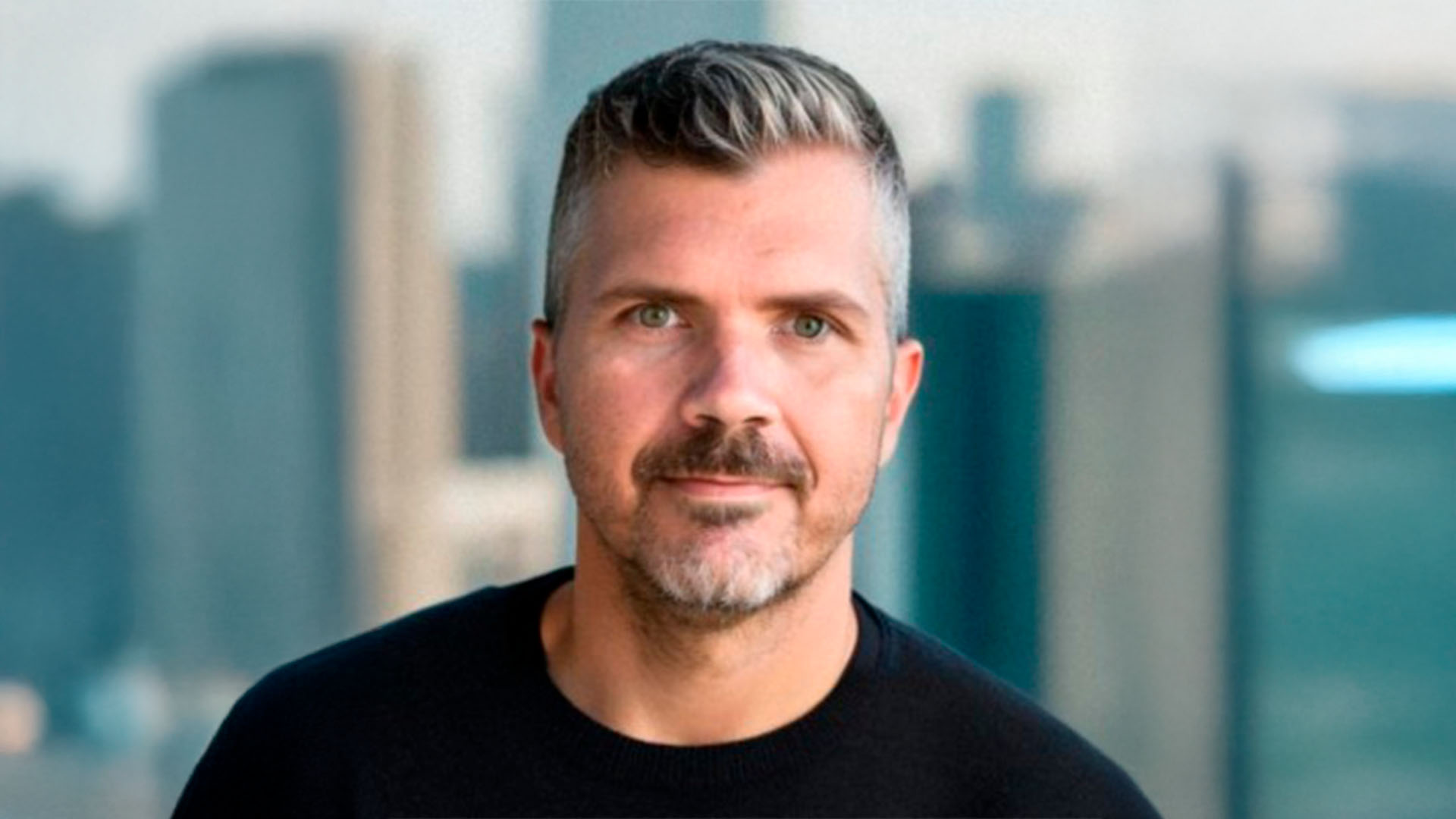

When organizations underestimate the human systems required to carry change across thousands of people, and their deeply ingrained ways of working, large-scale transformation breaks down quickly. For Timothy A. Holden, an operations executive with decades of experience running large organizations, transformation begins and ends with the employee experience. “If the why is fuzzy,” Holden says, “the change will be superficial. It will exist on paper, but it will not mean anything to anybody.”
With more than two decades in telecom operations, Holden has led national organizations through complex shifts in operating models, workforce design, and next-generation network deployment. His experience has shown that large-scale change only works when people understand why it is happening and are actively involved in making it real. Clear purpose, shared accountability, and continuous feedback turn transformation from a plan on paper into everyday behavior.
The case for change
The gap in most large transformations sits between strategic intent and day-to-day execution. Programs are launched with clear ambition at the top, but the operating reality below remains largely unchanged. “The biggest factor is getting across why the change has to happen and getting the entire team engaged in the process,” he says. That engagement requires language that resonates across roles, from senior leaders to technicians in the field, and space for people to challenge assumptions before execution begins. Well-intentioned transformations will lose momentum if they’re designed from a distance.
“There are a lot of great ideas that never deliver the benefit because they come from a 10,000-foot level and overlook the point of delivery,” he says. When the why is clear and shared, change stops being a program and starts becoming part of the culture.
Accountability that enables, not constrains
Every transformation must begin by defining ownership at every level. Senior leaders, directors, managers, and individual contributors all have clearly articulated roles, outcomes, and metrics. “What is the KPI that tells us this change is effective?” Holden asks. Crucially, those metrics are not imposed in isolation. Teams are involved early in shaping how success should be measured. By agreeing on accountability upfront, organizations avoid the perception of moving goalposts later. That agreement is reinforced through visible tracking, from dashboards, published results, and regular reviews that help make progress tangible.
“If you don’t actually track it and talk about the results, it all goes away,” Holden says. Publicly sharing outcomes, both good and bad, builds trust and keeps momentum alive.
Workforce design as a living system
Holden treats operational efficiency as an iterative exercise, shaped by how work actually happens on the ground. While leading a workforce redesign in field operations, he adjusted the operating model to better match how work was being delivered. Historically, teams responsible for building new sites were kept separate from those handling repairs and maintenance, each managed as its own workforce. While combining those teams appeared logical at a strategic level, execution revealed a more complex reality. Some technicians adapted well to hybrid responsibilities, while others consistently delivered stronger results when focused on a single discipline.
Rather than forcing uniformity, the operating model was restructured into three distinct groups: build specialists, repair specialists, and a hybrid team capable of handling both. “The biggest pitfall in transformation is becoming so locked into an idea that you’re never willing to change it,” Holden says. The result was a smoother flow of work across the network. Repair times fell, new sites reached service faster, and issues were resolved earlier because technicians with troubleshooting experience were embedded directly into build activity.
Technology as a force multiplier
Field operations still rely heavily on manual coordination, despite consumer technologies offering real-time visibility as a default. “We’re still on conference calls trying to find out if a crew is on site,” Holden says. Automation can replace that friction with data-driven oversight, freeing leaders to focus on higher-value decisions.
As networks evolve toward dense 5G deployments and edge data centers, scale becomes impossible without automation. AI-assisted leasing, zoning, site tracking, and quality assurance are no longer optional. They are prerequisites for speed. At the same time, Holden recognises that technology does not eliminate the need for people. It redirects it, from routine updates to higher-skill validation and problem-solving.
Why leadership determines outcomes
Transformation is ultimately a test of leadership credibility. Holden’s experience shows that morale is sustained when communication becomes a two-way system. “Communication is not just saying things,” he says. “You have to listen, then show what changed because of the feedback.” When teams see their input reflected in decisions, scepticism softens into commitment. For large, distributed organizations, that commitment is the difference between change that is endured and change that delivers.
Follow Timothy A. Holden on LinkedIn.