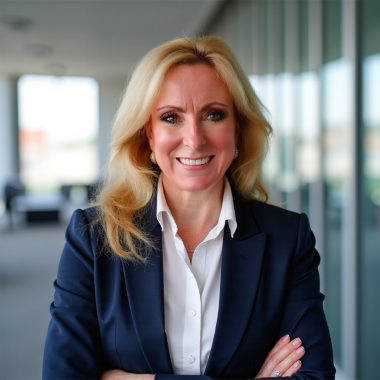

AI has moved from niche pilots to everyday infrastructure in less than two years, reshaping how sales teams across industries operate. With AI capturing and distilling the details, a sales rep can focus on reading the room, asking thoughtful follow-up questions, and building trust.
“Instead of sitting there scrambling, writing notes while you are meeting with a customer, now you can actually be present,” says Sadaf Z. Malik, a growth-driven biotech leader. Having spent years working with clinicians, researchers, and commercial stakeholders in scientific markets, Sadaf Z. Malik has navigated some of the most complex oncology and life sciences sales cycles.
From this experience emerges a universal lesson: sophisticated products or data do not guarantee a deal. Whether selling diagnostic tools or enterprise software, performance cannot rely on charm alone, today’s sales function demands intelligence, preparation, and the ability to connect authentically, qualities that AI can support but never replace.
AI That Gives Time Back To Relationships
The same logic extends across the tech stack. AI now supports multiple points in a sales workflow. AI agents on a company website can answer basic questions or guide visitors, freeing reps from early‑stage intake. Firewall-protected AI systems allow teams to safely upload internal documents so the AI can surface the right slide deck, case study, or training material in seconds. AI-driven search tools then help reps quickly craft accurate and consistent messaging.
In business development, these tools can also analyze patterns across markets, refine ideal customer profiles, and identify promising prospects much faster than manual research. “What AI really does is take the menial tasks that used to take hours and give that time back to the rep,” she says. “You want them pouring that time into finding deals and strengthening relationships.”
When Data Meets Emotion: Why Sales Still Belongs To Humans
Even with these efficiencies, many organizations are grappling with a sort of identity crisis. The rise of automation is pushing teams to navigate the tension between relationship‑driven selling and an increasingly algorithmic buyer journey. The temptation is to lean heavily on automation.
“For the qualification, you can use an AI agent, and that works well for basic questions, but people buy from people,” she says. She draws a sharp line between transactional purchases and high-stakes decisions, which she knows well from her years in biotech and oncology. Although these are scientific fields, the underlying truth applies everywhere: when decisions carry weight, trust matters.
AI can route leads, score opportunities, and send initial responses, but it cannot replicate the emotional intelligence required to understand a customer’s risk, fear, or urgency. “A human has emotions which an AI lacks,” Sadaf Z. Malik says. “That trust between two people is what enables the sale and the long-term relationship.”
Three Non-negotiables For CROs Over The Next 24 Months
Asked what a Chief Revenue Officer should prioritize to future proof a sales team, Sadaf highlights three non-negotiables: talent development, tech stack design, and culture.
1. Talent: Presentation and questioning skills: For Sadaf, no amount of automation compensates for weak interpersonal skills. “When you walk into a room, reps have to be trained on how to ask questions to uncover pain points and connect with the customer,” she says. Her training philosophy favors immersion. “The very first thing I do when someone new joins the team is take them out in the field,” Sadaf says. Watching real conversations, then practicing live, forces reps to use critical thinking while observing how experienced sellers navigate nuance.
2. Tech stack: Solid foundations with AI woven in: Sadaf views the core stack as essential: reliable access to contact information, a platform such as LinkedIn Sales Navigator to connect, a searchable content hub for collateral, a robust CRM, and standard productivity tools. The AI layer, she believes, is moving rapidly from “nice to have” to necessary. “It will become a must have because of how many hours it saves, especially on prospecting,” she says.
3. Culture: Collaboration as a survival trait: If there is one cultural factor Sadaf treats as a red line, it is collaboration. “If that collaborative spirit is not present in the sales team, that team is doomed for failure,” she says.
Augmented, Not Autonomous: Creating Trust At Scale
As companies race to automate more touchpoints, the risk is removing the very interactions that strengthen their reputation. “Salespeople exist because they are masters at human connection,” she says. “That is not something AI can ever replicate or replace.”
Take mixers, scientific networking events, and customer dinners. These environments create space for genuine conversation and shared understanding. “There is nothing that is going to replace breaking bread with your customer,” she says.
Looking ahead, Sadaf expects AI to show more apparent emotional intelligence, but the heart of selling will always rely on people. AI can streamline intake, data entry, and automated responses, but humans carry the responsibility of creating moments that feel personal and meaningful. That is where connection is built and where brands earn long‑term trust.
To continue the conversation, connect with Sadaf Z. Malik on LinkedIn.