
Clinically-applied neurostimulation has evolved substantially over the last decade. Technologies once limited to research settings are now being used in real clinical environments, helping practitioners address complex psychological and developmental conditions, as well as head injury and age-related cognitive decline. However, education has not reliably kept pace with the speed of advancement.
For many clinicians, the challenge is not a lack of motivation—it’s a lack of a coherent educational pathway. Instruction in this field is patchy at best, and it is rarely led by those who work in clinics. The result can feel like being handed the keys to a high-performance aircraft—with a user manual written in a foreign language.
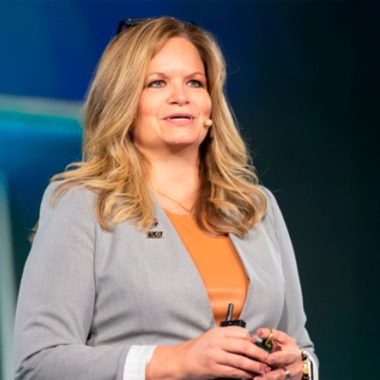
That gap is where Tiff Thompson, Ph.D., has focused her work. As CEO of the School of Neurotherapy, she has built an educational model designed to help clinicians gain competence in a quickly-evolving field.
“The school was built to streamline education in the field of computational neuroanalysis and clinically-applied neurostimulation,” Thompson says.
Her goal is practical: to make training clinically available and applicable, as well as effective and data-driven.
A new clinical discipline
Clinically-applied neurostimulation sits at an increasingly important intersection of neuroscience and mental health care. Clinicians can now use EEG-based brain imaging to identify functional patterns associated with anxiety, depression, attention disorders, and other clinical syndromes. When interpreted correctly, this data provide insight into brain function and supports more individualized treatment planning—often revealing information symptom-report alone cannot.
Neurostimulation has not yet matured as a single, universally standardized discipline. It is still evolving. There are multiple modalities, competing frameworks, and major variability in training rigor and quality. As the field grows, so does the risk that clinicians gain access to advanced technology before they have a strong enough foundation to apply it safely.
Thompson’s response to this problem has developed along two parallel tracks: her clinical work at NeuroField Neurotherapy, a Santa Barbara-based clinic specializing in neurotherapy services, and the School of Neurotherapy, built explicitly to provide a clear route from foundational knowledge to high-level clinical application.
“The aim of the School [of Neurotherapy] is to take clinicians from beginners to mastery,” she says, “because it is knowledge that translates into patient success.”
A clear path in a complex training landscape
For clinicians entering neurotherapy, one of the most common early experiences is choice overload. There are many platforms for EEG acquisition and analysis, a myriad of treatment options, and competing philosophies. This fragmentation can slow learning and create uncertainty about what matters most.
Thompson’s educational approach is designed to reduce that uncertainty without reducing rigor.
At the School of Neurotherapy, areas such as EEG acquisition, QEEG interpretation and certification, and individualized neurostimulation strategies are taught to clinically licensed professionals. The intent is to give clinicians the lens to translate findings into safe and effective clinical decisions.
Training is treated as an integrated progression. Coursework is paired with mentorship and board certification preparation—including pathways for QEEG Diplomate and Certification in Neurotherapy.
Mentorship and clinical judgment
A defining aspect of Thompson’s work is her focus on computational brain analysis and individualized profiling. A person’s brain data often matches their symptomatology—but not in a simplistic way. Two clients may share a diagnosis yet look nothing alike in their neurology.
That diversity requires careful interpretation and drives the selection of customized interventions. This is where Thompson emphasizes multi-modal neurostimulation: the deliberate blending of multiple stimulation approaches to address psychological and brain-based conditions. It remains a relatively new clinical discipline, and few clinicians are yet practicing it with precision.
Setting standards in a new field
As clinically-applied neurostimulation becomes more widely discussed in mainstream mental health settings, its reputation will be determined by the competence of its practitioners. The long-term credibility of the discipline depends on the capability and training of those applying it.
Thompson’s work reflects a broader truth about fast-evolving clinical fields: progress requires infrastructure. Education provides that infrastructure. Training must be clinically grounded, and rigorous enough to support both outcomes and ethical responsibility.
By building the School of Neurotherapy into a streamlined, proficiency-driven model (and pairing it with real clinical practice at NeuroField Neurotherapy) Thompson has created an on-ramp for clinicians who want to develop skill efficiently while holding those clinicians to a high standard.
And in a discipline still defining itself, that kind of clarity matters.
Follow Tiff Thompson, Ph.D., on LinkedIn for insights on neurotherapy education, QEEG training, multi-modal neurostimulation, and clinically-applied neuromodulation.