
The most overlooked factor in P&L performance is the disconnect between finance and operations. Financial leaders often evaluate results after they appear on an income statement, while operators manage the daily decisions that quietly shape those results in real time.
When finance and operations operate on parallel tracks, critical signals get lost between reporting cycles and frontline execution. Metrics are reviewed but not always translated into behavioral change, and targets are set but not always connected to the processes that drive them. Closing that gap demands a shared understanding of which operational levers directly influence margin, cash flow, and growth, along with a disciplined cadence of communication between those who measure performance and those who create it.
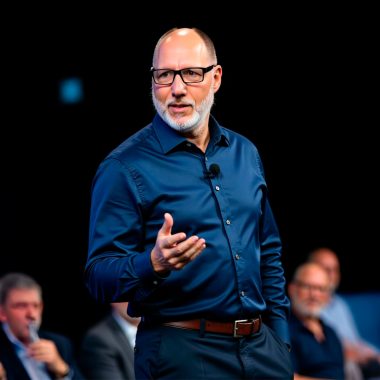
“Frontline teams responsible for day-to-day operations both in and out of the organization play a crucial role in determining the financial performance of the business,” says Hansil Kalaria, Chief Pharmacy Officer at CAN Community Health. “Their engagement and commitment are paramount to achieving this goal.” Kalaria, who has spent more than 25 years leading complex pharmacy and healthcare operations across nonprofit, venture-backed, and enterprise environments, argues that when CFOs lack visibility into those operational drivers, improvement efforts stall before they begin.
The Real Barriers to Operational Discipline
“Comprehending and correlating the pivotal operational key metrics and indicators that influence the business performance” is essential, Kalaria explains. When leaders call for greater operational discipline, the conversation often turns to messy data, unclear ownership, or incentive misalignment. Kalaria acknowledges each of these plays a role. Still, two issues rise above the rest: accountability and alignment.
Accountability, in his view, starts with proximity. Leaders must engage directly with the individuals performing the work and remove obstacles that prevent effective execution. “Engaging in conversations and observing the individuals who actually perform the frontline work is very essential,” he says.
Alignment is equally critical. Operators must understand the problem they’re solving and how success will be measured. “It is crucial to ensure that operators comprehend the problem they’re attempting to solve and the criteria they will use to determine success once the problem has been resolved.” For CFOs seeking a quick diagnosis, these two dimensions provide a starting point. If accountability and goals are poorly defined, operational discipline will never translate into measurable P&L impact.
A 90-Day Playbook for Measurable Impact
Asked what he would do if given 90 days to deliver measurable P&L improvement without a large transformation budget, Kalaria outlines a three-pronged approach – a repeatable system that connects daily behaviors to financial outcomes.
- Examine the Primary Drivers of Performance: Identify what is adversely affecting the P&L and distinguish between structural problems and execution gaps. This step requires separating systemic issues from day-to-day breakdowns so leadership can focus on what truly moves financial outcomes.
- Prioritize the Highest-Impact Improvements: Isolate the areas for improvement that will have the most significant financial impact. Prioritization is essential. Resources are finite, and attention must be directed where returns are measurable and meaningful to the bottom line.
- Execute With the Teams Closest to the Work: Implement solutions in partnership with frontline operators. “By understanding these two items, the P&L performance will drastically improve,” he notes, referring to frontline engagement and operational metrics. Execution, not analysis alone, produces results.
Locking In Gains Through Process Discipline
Sustaining improvement requires structure. For that, Kalaria turns to the DMAIC methodology, a Six Sigma framework he’s applied for decades. “D stands for define, M stands for measure, A stands for analyze, I stands for improve, and C stands for control,” he says. The sequence forces organizations to articulate the problem, quantify defects, identify root causes, implement targeted solutions, and continuously monitor performance.
The power of DMAIC lies in its incremental nature. Rather than relying on dramatic one-time interventions, it builds disciplined improvement over time. “You just need to have discipline and practice this methodology for each of the processes for you to realize significant improvements for the business,” Kalaria says. For CFOs, the framework provides assurance that gains won’t erode after the initial push. It embeds financial accountability directly into operational workflows.
Operational Discipline Determines Strategic Outcomes
Kalaria recalls a recent acquisition that arrived with negative Earnings Before Interest, Taxes, Depreciation, and Amortization (EBITDA) and insufficient due diligence. The business was using a line of credit to pay employees. The CFO faced a stark choice: turn it around or write it off. Kalaria requested 12 to 18 months to evaluate and intervene. For the first 90 days, he studied people, processes, and systems to understand the underlying issues. What he discovered was a workforce deeply committed to their jobs and families. Their engagement became the foundation for change. After mapping root causes and establishing clear priorities, he implemented improvements one process at a time, leveraging Six Sigma tools and disciplined quarterly execution. Eighteen months later, the business achieved positive EBITDA and sustained profitability.
The lesson isn’t simply that turnarounds are possible. It’s that financial recovery depends on operational rigor anchored in people. When accountability, alignment, and process discipline converge, P&L performance follows. Sustainable financial improvement is built in the operating model, not imposed from the ledger. As Kalaria demonstrates, operational discipline is the bridge between mission and margin.
Follow Hansil Kalaria on LinkedIn for more insights.