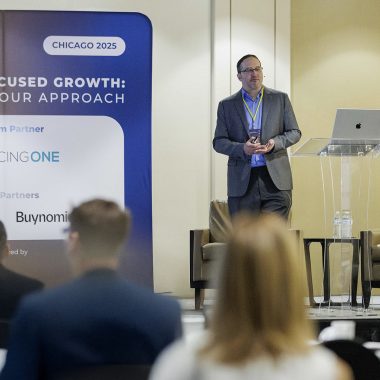

For human resource leaders in life sciences, executive hiring is a key lever of whether an early-stage company becomes a success in reaching new patients. As Peter S. Kaplan, Founder & President of Synergy Search Partners LLC, puts it, “Hiring the right executives for a company is the absolute most important job of an HR organization, particularly in life sciences where leadership directly impacts patient outcomes.” While innovation often begins with promising science, it is leadership that determines whether that science translates into real-world impact. Venture investors have long recognized this dynamic. “Great teams drive great outcomes more than great science or great ideas,” Kaplan says, noting that the ability to execute, adapt, and learn ultimately separates successful companies from the rest.
Traditional hiring in life sciences often emphasizes credentials, however, C-suite recruitment demands a deeper evaluation of how leaders think, learn, and operate under pressure. Kaplan points to adaptability as a defining trait. “Are they the type of people that believe in continuous learning? Are they going to push themselves to work outside of their comfort zone?” he says. This mindset is essential in environments where regulatory hurdles, clinical uncertainty, and shifting capital markets require constant recalibration.
Executive hiring for initial public offering (IPO)-ready companies and venture capital (VC)-backed ventures carries amplified consequences, because leadership behavior scales quickly. “Anyone you hire as an executive, their style and their approach will reverberate throughout the company,” Kaplan says. That influence shapes not only execution, but future hiring decisions and organizational culture. That is why a dedicated executive search partnership remains central in life sciences hiring. It creates a structured, high-touch process that aligns boards, CEOs, and HR leaders around a shared definition of success before candidates are ever approached.
Building Alignment Across HR, Boards, and Leadership
Without alignment between HR teams, boards, and executive leadership, even the most qualified candidates can be misjudged. Kaplan emphasizes the need for a shared success profile rooted in specific, observable behaviors. “The executive team and the HR team are aligned on what good looks like and what it is they’re looking to hire for,” he says. This includes defining core competencies, agreeing on structured interview questions, and consistently evaluating candidates against those criteria.
The process must also evolve in real time. Early interviews should inform later-stage assessments, allowing teams to refine priorities until they converge on the three or four attributes that truly matter. Just as critical is the role HR plays in the process. “They have to serve as trusted advisors, not just process administrators,” Kaplan says. That means challenging unrealistic expectations, guiding stakeholders toward evidence-based decisions, and ensuring discipline throughout the search.
Translating Track Records Into Future Performance
A strong resume alone does not guarantee success in a new environment. The challenge for HR leaders is determining whether a candidate’s past achievements will translate within a different culture, structure, and stage of growth. Kaplan advises starting with an internal assessment before evaluating candidates. Organizations must clearly understand how decisions are made, how conflict is handled, and what level of risk and collaboration is expected. These insights should then be translated into leadership behaviors that can be assessed during interviews.
From there, behavioral and competency-based interviews become essential tools. “The question always becomes: what are you good at? But also: how do you overcome obstacles, how do you meet resistance, and what trade-offs do you make?” Kaplan says. The focus shifts from outcomes to process, revealing how leaders actually drive results. Thorough referencing further strengthens this evaluation. By probing how candidates operated in both similar and contrasting cultures, HR teams can better predict adaptability and long-term fit.
CEO Hiring and Enterprise Leadership Raise the Stakes
Among all executive roles, CEO hiring remains the most complex. The implications extend beyond operational performance to investor confidence and long-term viability. “Hiring the right CEO puts the company in a much better place for success, and hiring the wrong CEO could derail the entire business,” Kaplan says. The challenge lies in balancing scientific credibility, business acumen, and personal commitment. For early-stage companies, the latter often proves decisive. Leaders must be fully invested in the mission, particularly in areas such as rare disease where the connection to patient impact is deeply personal.
At the same time, the definition of leadership itself is evolving. Organizations are increasingly prioritizing enterprise leaders over functional specialists. Kaplan notes that executives must now demonstrate broader accountability, including AI fluency, intelligent risk-taking, and a people-centric approach across functions.
This shift is reshaping talent strategy for medtech startups and biopharma alike. It also extends timelines. High-stakes searches, particularly for board-level hiring and IPO-track talent, now require patience. “You can’t always expect results overnight,” Kaplan says, emphasizing that the best outcomes often come from deliberate, rigorous processes.
The Strategic Imperative Behind Executive Hiring
Ultimately, executive hiring in life sciences is a strategic discipline that determines how effectively companies can translate innovation into patient outcomes. Culture has emerged as a decisive factor in this equation. Candidates are increasingly selective, evaluating not just the role but the organization’s trajectory and values. “It is a two-way street,” Kaplan says, underscoring the need for consistency and clarity throughout the hiring process.
For HR leaders, the mandate is clear. Building leadership teams in biopharma requires precision, alignment, and a willingness to engage deeply with both candidates and stakeholders. When executed well, it does more than fill roles. It builds the foundation for enduring companies and meaningful advances in human health.
Follow Peter S. Kaplan on LinkedIn or visit his website for more insights.