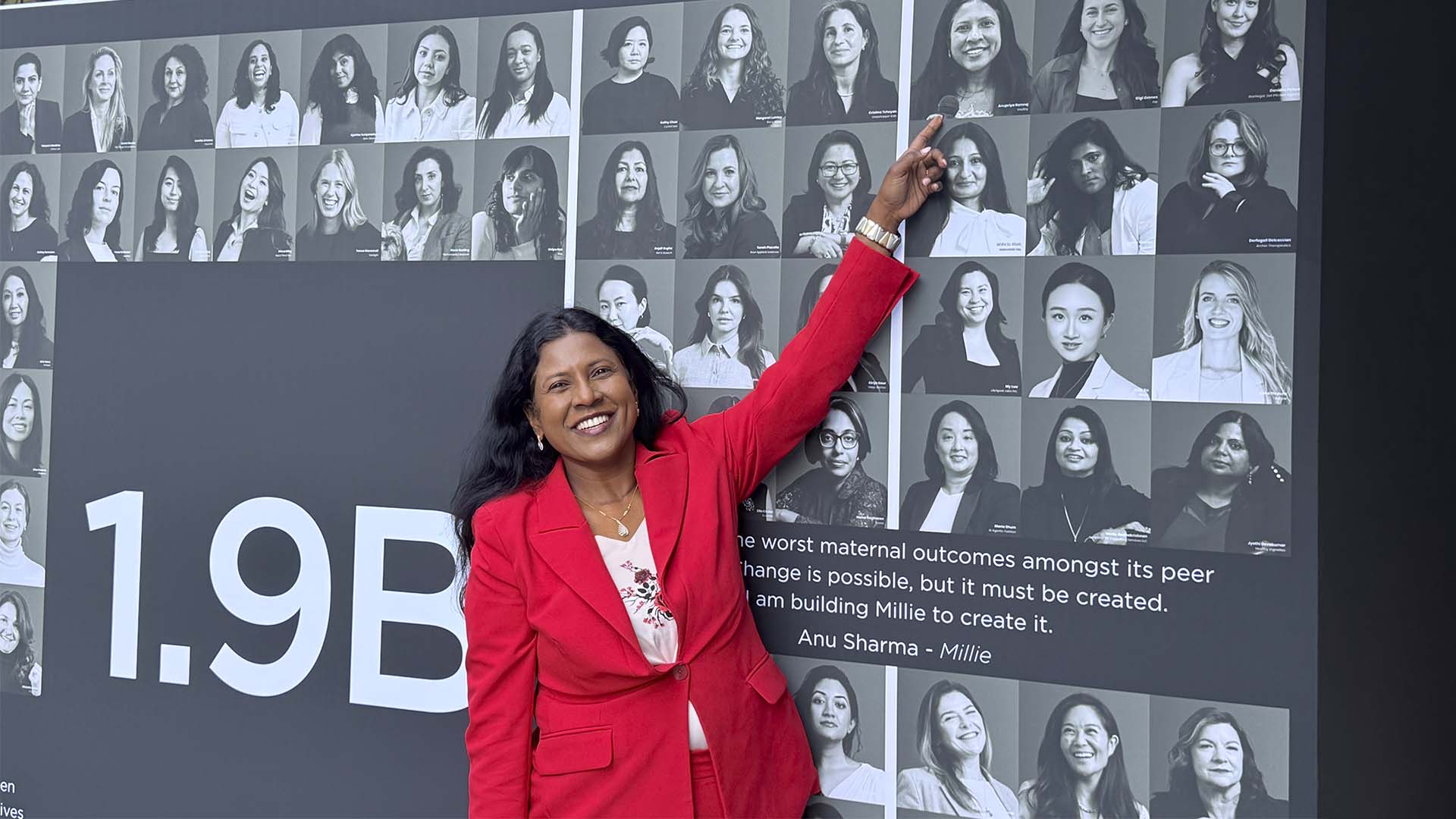

The most consequential technology problems are rarely the most complex ones. They are the simple ones nobody has solved. Anu Ramraj spent 25 years shaping AI strategy for Fortune 500 companies before a different kind of problem captured her attention, not the challenges of the world’s largest organizations, but those of its most overlooked people.
Foster kids aging out of the system with no documentation. Seniors with memory problems with family struggling to find their records. Disaster victims who lost everything to fires or floods, including the papers that prove it. The technology to help them has existed for years. The will to build it, and the design thinking to make it genuinely usable, had not arrived until now. “Sometimes the most compelling problems are the deceptively simple ones,” Ramraj says, “that have not been solved for decades even though the technology existed.”
The Problem Is Not Storage. It Is Intelligence and Trust
Vital records, such as those for identity, legal, medical, financial, educational, and professional, are scattered across disparate systems for virtually every person in the United States. Digital storage has existed for decades, and it has solved none of it. Google Drive and Dropbox gave people a place to store files. They did not give people a way to understand what they had, what was missing, what was expiring, or whether any of it could be trusted.
Ramraj’s platform, Vaultzy, addresses all three layers simultaneously. AI categorizes documents and builds lifecycle intelligence around them, alerting users when a passport is approaching its renewal window, for example, before the expiration creates a problem rather than after. A human-in-the-loop notary process anchors critical documents on blockchain, addressing a trust gap that has grown more urgent as AI makes document forgery trivially easy. “It’s so easy to forge documents in this age of AI,” Ramraj says. “The trust factor is more important than ever.” Bank-grade security ensures the platform merits the trust it asks users to place.
The Life score built on this foundation functions like a credit score for personal preparedness. It reflects how ready a person is based on their specific stage of life; the documentation needs of an 18-year-old aging out of foster care are fundamentally different from those of a 65-year-old approaching retirement. The score is a guiding light offering actionable steps on how to improve it, designed to make people proactive rather than reactive. “Once your house has burned down,” Ramraj says, “you’ve lost the opportunity to do this.”
Simplicity Is the Product
Agentic AI has generated considerable excitement and considerable confusion. Most of it has been built by and for people with the technical sophistication to configure it. That is not the population that needs it most. The underserved communities Ramraj is focused on need AI that works with a single click.
PayPal’s adoption did not come from its technical sophistication. It came from the fact that paying someone required nothing more than an email address. The same principle governs what will make Vaultzy useful for everyday life: finding a document in one place, sharing it with a QR code, receiving a reminder before a deadline passes, and having a form auto-filled without manual input. “Simple reminders and guidance are what will make the system sticky,” Ramraj says. The most powerful AI application is not always the most complex one. It is the one with the ability to simplify and streamline what people already need to accomplish.
In fact, this idea of frictionless utility becomes a central thread in her broader exploration of AI’s impact across sectors. In her co-authored book, When AI Robots Knock, Ramraj examines nine industries being reshaped by AI agents alongside more than 25 global experts. The recurring pattern across all of them is that the shift coming is not displacement but increased capacity, the ability to do significantly more in a day than was ever previously possible. The grunt work that currently consumes hours gets simplified. What individuals and organizations do with that reclaimed time is the question that will define the next decade.
Follow Anu Ramraj on LinkedIn for more insights on AI transformation, and building platforms that serve the people most technology leaves behind.