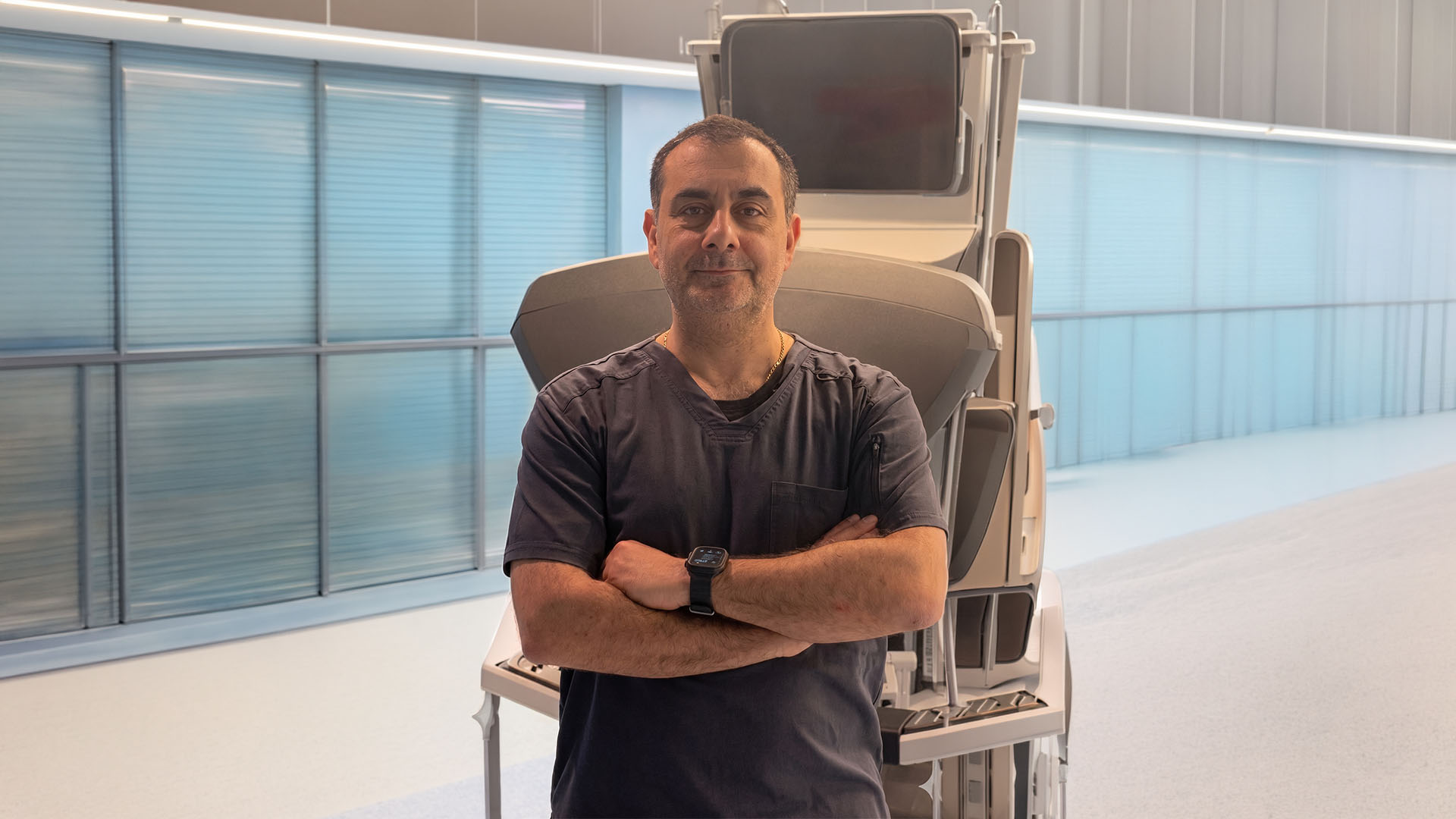

Every time an advanced endoscopist travels internationally and visits colleagues around the world, the same realization surfaces: they have things we do not and we have things they do not. That observation is what convinced Dr. Michel Kahaleh that a formal global structure for therapeutic endoscopy was not just useful but necessary.
Kahaleh, founder and CEO of FITE, the Foundation for International Therapeutic Endoscopy, and one of the world’s leading therapeutic endoscopists, built the organization to turn that realization into a working international community. The goal was not to standardize endoscopy from one center outward. It was to bring the best of everyone together and make the field stronger as a whole.
“It’s very important to understand the needs of each other,” Kahaleh reflects, “and figure out a way to collaborate, to bring the best of all of us together.”
Structure That Makes Global Collaboration Operational
The challenge of building an international medical community is not a matter of motivation; specialists in advanced endoscopy share a common passion that makes connection natural. The challenge is structure. FITE addressed this by organizing around committees with specific clinical areas of focus: obesity, pancreaticobiliary diseases, resection, and others. When Kahaleh travels internationally and encounters specialists with deep expertise in one of those areas, the pathway to collaboration is already defined. International chapters form around shared clinical interests and connect directly with national committees addressing the same problems.
The result is a network where specialists from Brazil, Saudi Arabia, Mexico, Europe and beyond are not simply attending conferences together; they are developing guidelines collaboratively, combining institutional knowledge, and producing standards that are international rather than national in scope.
A recent visit to Brazil identified a strong group focused on endoscopic resection; a Brazilian chapter dedicated to that area followed naturally. In Riyadh, a group with deep expertise in pancreaticobiliary disease became the foundation for a chapter focused on that area. “The key is that these international chapters don’t operate in isolation,” Kahaleh notes. “They interact with our national committees that share the same focus, and together they develop guidelines that are not just national but international.”
AI as a Diagnostic Partner With Physician Oversight as a Non-Negotiable
Artificial intelligence (AI) is moving into therapeutic endoscopy in concrete and practical ways. In cholangioscopy, a procedure that places a small camera inside the bile duct, AI programs are already being used to refine diagnoses in real time. Similar tools are in development for echoendoscopy. FITE has established a dedicated AI committee to examine how AI can be responsibly integrated into advanced endoscopy and to ensure that adoption across the international network is consistent and safe.
FITE’s first obligation is to protect its community from inappropriate use. There must always be a physician behind the AI. The physician makes the final diagnosis. The physician decides on treatment. AI is a partner in that process, but the era of AI taking over patient care is, in Kahaleh’s assessment, far into the future. “Without that oversight, you risk real chaos in the field,” he states, “and that is something FITE will not allow to happen.”
Over the next five years, the ambition is to complete FITE’s transformation from a national organization into something larger and more consequential, which Kahaleh describes as the ‘United Nations of advanced endoscopy’. Essentially, a worldwide community of specialists committed to raising the standard of care not through any single institution or country, but through a network of people learning from each other and bringing something new back every time they return home.
Follow Dr. Michel Kahaleh on LinkedIn for more insights on therapeutic endoscopy, international medical collaboration, and the future of advanced endoscopic care.