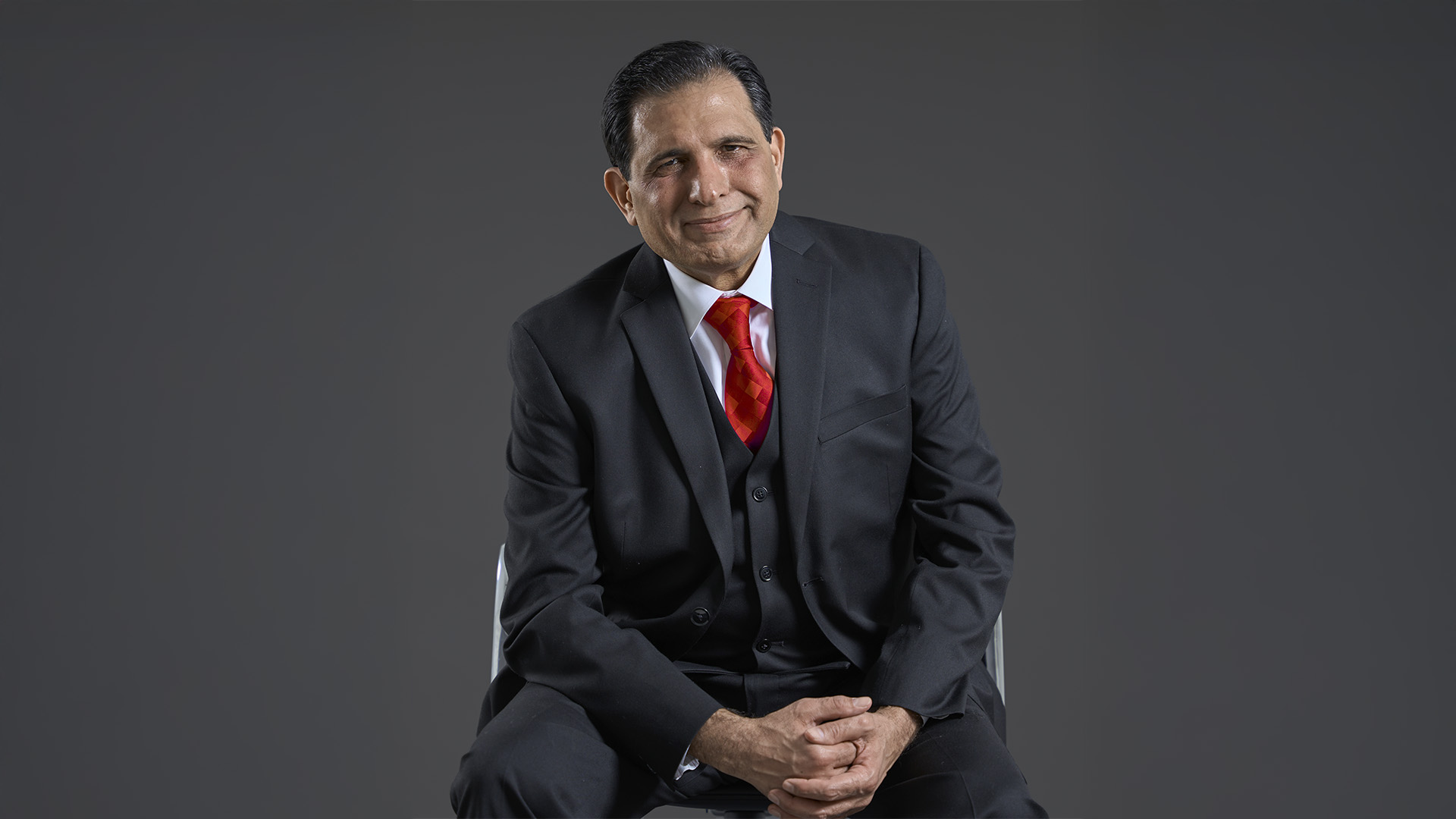

Artificial intelligence (AI) has become the centerpiece of corporate transformation strategies, even though many still risk misunderstanding where AI truly delivers value. For companies eager to future-proof operations, Dr. Adil Dalal, Principal and Founder at Pinnacle Process Solutions, believes the conversation must begin not with technology, but with operational discipline. “Organizations rush to apply AI to broken, fragmented or waste-producing processes,” Dr. Dalal says. “AI doesn’t fix chaos. It just scales it.” After more than two decades leading large-scale operational transformations across global enterprises, Dr. Dalal argues that the real advantage comes not from deploying new tools, but from strengthening the operational systems that AI amplifies.
Operational Excellence Before Automation
AI is often treated as a shortcut to efficiency. Dr. Dalal views it differently. The most overlooked lever in modern operations is process optimization before automation. “The true lever is not technology,” he explains. “It is clarity of the value stream and disciplined execution of optimization.” Operational excellence frameworks such as lean thinking, statistical rigor, and structured problem solving create the conditions where AI can generate meaningful impact. When those systems are already embedded into daily operations, AI becomes a powerful accelerator. “When that foundation exists, AI becomes a force multiplier,” Dr. Dalal says. “It enhances root cause analysis, improves pattern recognition, and strengthens predictive decision making.” Without that structure, organizations simply digitize inefficiency. Dashboards and algorithms may appear sophisticated, but they end up measuring waste rather than eliminating it. “Operational excellence first. Intelligent acceleration second.”
Avoiding the Trap of AI Hype
The excitement surrounding AI has also created a tendency for organizations to pursue highly visible innovations rather than measurable operational impact. Deploying chatbots or analytics dashboards may create the appearance of progress, but real transformation is measured in tangible outcomes such as cycle time reduction, cost optimization, quality improvement, customer experience, and strategic speed. “Many organizations are confusing visibility with value,” Dr. Dalal says. To avoid falling into the “hype cycle,” Dr. Dalal advises leaders to begin with clearly defined business problems and measurable baselines. AI should be piloted within controlled operational frameworks where both financial and cultural impact can be evaluated before broader implementation. “Remember, AI isn’t a strategy,” he says. “It is an enabler of your strategy.” Organizations that succeed over the next decade will not necessarily be those with the most AI tools, but those that integrate intelligence, disciplined processes, and purpose.
Integrating AI Without Undermining Culture
Beyond operations, the rapid expansion of AI has also introduced a human challenge. Employees often fear that automation threatens their relevance, creating resistance to transformation initiatives. Dr. Dalal believes the solution lies in what he calls “humanistic integration,” a concept he explores in his book Lean AI: The Humanistic Integration of Lean and AI. “Efficiency without humanity creates resistance,” he says. “Intelligence without purpose creates fear.”
Rather than replacing people, AI should elevate their contribution. Dr. Dalal emphasizes three principles that leaders should prioritize when introducing AI into the workplace: transparency, involvement, and elevation:
- Transparency requires clearly communicating why AI is being implemented and what problems it aims to solve.
- Involvement means engaging employees directly in redesigning processes, since those closest to the work often understand improvement opportunities best.
- Elevation focuses on removing repetitive tasks so employees can operate at higher cognitive and creative levels.
“Culture erodes when people feel replaced,” Dr. Dalal says. “But culture strengthens when people feel elevated.”
Scaling AI Across Global Organizations
For multinational companies, combining AI with operational excellence introduces an additional layer of complexity. The most common failure point, Dr. Dalal says, is assuming that every region operates at the same level of operational maturity. “The greatest risk is misalignment between global ambition and local readiness,” he says. Organizations frequently deploy AI platforms centrally while overlooking differences in data governance, leadership capability, and process discipline across regions. Operational excellence, Dr. Dalal notes, is as much cultural as it is technical.
When AI is layered onto uneven systems, the result is fragmentation rather than transformation. “Companies end up building impressive dashboards but seeing very inconsistent performance,” he says. True global scale requires four foundational elements: standardized core processes, strong data integrity, leadership capability at every level, and governance structures that balance global consistency with regional flexibility. “True scale is not about technology rollout,” Dr. Dalal adds. “It is about synchronized capabilities.”
Preparing for the Next Industrial Shift
Dr. Dalal views the rise of AI as a transformation on the scale of the internet or electricity. The difference is the speed at which the change is unfolding. “This is the fifth industrial revolution,” he says. “And its trajectory is vertical.” That acceleration has major implications for industries such as manufacturing, where AI-enabled systems can drive predictive maintenance, error-proofing, and dramatic reductions in operational waste. Yet many organizations remain hesitant due to concerns around ethics, privacy, and workforce disruption. Future-ready organizations will adopt a balanced approach, embracing AI’s capabilities while placing human judgment and ethical guardrails at the center of technological progress. “Humanity must remain at the center,” Dr. Dalal says. “Technology should serve that purpose, not replace it.”
Follow Dr. Adil Dalal on LinkedIn or visit his website for more insights.
