
Key takeaway
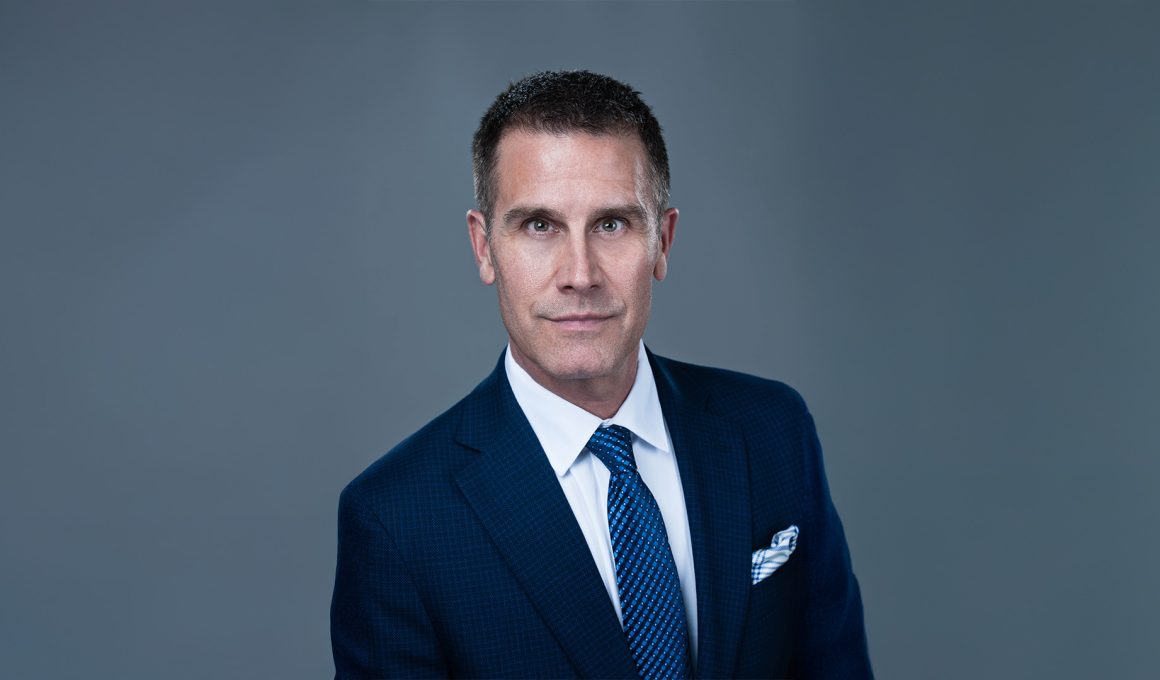
Entrepreneurs build multi-industry companies by starting with the right people and structuring business units so they can later be sold or spun off, according to Bruno P. Allaire, a Harvard Business School MBA who has led or participated in as many as 30 early-stage companies. At Defiant International, he created four wholly owned subsidiaries for energy, technology, entertainment and real estate. Allaire is also applying blockchain to tokenize commercial real estate, oil and gas and power generation investments.
For Bruno P. Allaire, building companies from scratch has been a decades-long pursuit. With more than 30 years of experience and a career that began in corporate America before transitioning to entrepreneurship, Allaire has led or participated in as many as 30 early stage companies. “I realized early on that I was an entrepreneur at heart,” he says. “I really wanted to be the master of my own destiny. I had so many ideas that I wanted to bring to life, and that’s when I made the shift toward building new businesses.” With an MBA from Harvard Business School and further academic training in management, finance, advertising, and environmental policy, Allaire combines this solid business foundation with a relentless drive to create. His ventures have ranged from running a public oil and gas exploration company for nearly a decade to launching technology-driven startups focused on blockchain and tokenization. The throughline, he says, is a determination to structure companies intelligently and give them the ability to grow, adapt, and eventually achieve liquidity.
Building Across Industries: The Importance of Structure
The challenge of launching businesses in multiple sectors lies not only in expertise but in managing complexity. Allaire believes the solution begins with people. “It all starts with people when you’re building a company,” he says. “You have to have the people with the right capabilities and the right skill sets. Oftentimes you’re looking for skill sets that are transferable from one industry to another.” Beyond talent, structure plays a central role in mitigating risk and enabling future flexibility. At his current venture, Defiant International, Allaire has overseen the creation of four wholly owned subsidiaries that house separate divisions for energy, technology, entertainment, and real estate. “When you’ve got business units organized in separate silos, it’s real easy to either sell off a company when the company decides they want to create a liquidity event, or spin a company off to go public if there’s enough revenue to support that company,” he says. This structural foresight not only protects the core business but also opens multiple pathways for growth and capital raising. In Allaire’s view, it’s far better to design with future opportunities in mind than to retrofit several years into operations.
Embracing Innovation and Emerging Technologies
Allaire has consistently leaned into innovation, particularly as it relates to artificial intelligence and blockchain. “There’s not going to be an industry that won’t be impacted by AI. The question is how soon each industry will be impacted, and I think some will be completely disrupted.” Defiant International has invested in AI-enabled platforms, including a crypto exchange, and is exploring applications of AI in fields like geology, where analyzing vast quantities of data is essential. He sees the oil and gas industry, in particular, as ripe for AI-driven transformation, especially as fewer young professionals enter the sector. “AI has the ability to consume copious amounts of data and synthesize that very quickly,” Allaire explains. “That’s an area where it can have a real possibility to disrupt.”
Bridging Traditional and Cutting-Edge Markets
Perhaps most notably, Allaire is applying blockchain technology to traditional markets long dominated by exclusive investor networks. His team is working on the tokenization of commercial real estate assets, oil and gas investments, and power generation projects. By leveraging blockchain, Allaire aims to democratize access to deals that were once limited to a small circle of accredited investors. “We’re really getting involved in bridging Web3 and blockchain technologies with old school traditional industries,” he shares. “We’re working to democratize investments in these traditional industries and using blockchain to create more security, more transparency, and more liquidity.” This vision aligns with Defiant International’s motto: disrupt, innovate, and transform. Allaire’s strategy focuses on integrating technology trends in ways that reshape how capital flows into long-established sectors.
Financing, Talent, and the Future
While financing is a crucial piece of the puzzle, it follows naturally when the right team and opportunity are in place. “If you’ve got the right opportunities and you’ve got the right talent, financing is critical, but it usually falls into place,” he says. As he continues to develop multi-industry ventures, Allaire remains focused on blending structure, innovation, and human capital. His approach shows how entrepreneurs can navigate complexity by combining forward-looking design with a willingness to embrace emerging technologies.
For more insights from Bruno P. Allaire, visit his LinkedIn.
Frequently asked questions
How should a multi-industry company be structured?
Bruno P. Allaire organizes business units into separate silos. At Defiant International, four wholly owned subsidiaries house energy, technology, entertainment and real estate, making it easy to sell a unit for a liquidity event or spin one off to go public.
How is blockchain being used in traditional industries?
Allaire's team is tokenizing commercial real estate assets, oil and gas investments and power generation projects to democratize access to deals once limited to accredited investors, using blockchain for more security, transparency and liquidity.
How could AI affect the oil and gas industry?
Allaire sees oil and gas as ripe for AI-driven transformation, especially as fewer young professionals enter the sector, because AI can consume and synthesize large amounts of data quickly in fields like geology.