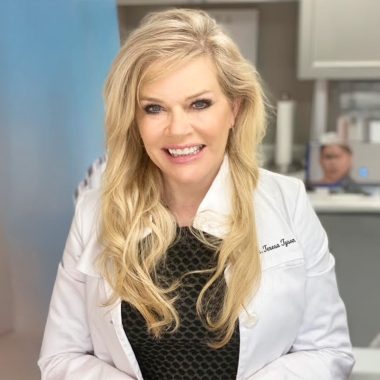

Every growth strategy makes assumptions about people. It assumes the company has leaders who can scale, teams with the right capabilities and a culture that can withstand change. Those assumptions often receive far less scrutiny than the financial plan. Nancy D. Adams, a chief people officer in healthcare technology, believes that is a mistake. Her experience scaling organizations has reinforced a straightforward principle: revenue growth is ultimately limited by organizational capability. “You can have a great strategy, but if you don’t have the talent to execute it, the strategy stays on a PowerPoint.”
Talent As A Business Capability, Not A Support Function
The shift Adams describes started with a change in posture. Her team stopped treating talent as an HR issue and started treating it as a business capability, which meant running a different diagnostic entirely. Rather than auditing programs, they interrogated fit: did the company have the right leaders, in the right roles, with the capabilities required for where it was headed? That question is harder than it sounds, because answering it honestly tends to produce findings nobody wants to act on. Adams did act. Her team became deliberate about succession and high-potential talent, and willing to make tough calls when the capabilities of the organization did not match the strategy. The second half of that sentence is where most companies quietly fail.
The third move tied the first two to the growth model directly. Hiring in sales, product, engineering, and customer success stopped being staffing and became capital allocation. “Those were not simply staffing decisions,” Adams says. “They were decisions about where the company needed capability to create customer value and grow.” The distinction matters because it changes who owns the decision and what evidence it requires. A staffing decision gets justified by a vacancy. A capability decision gets justified by a gap between the current organization and the one the strategy assumes. Companies that never make that translation end up fully staffed and structurally unable to execute, which is a far more expensive failure than an open requisition.
Hiring For Where You Are Going
Doubling revenue usually dilutes culture, and the mechanism is boring: growth creates urgency, urgency creates open seats, and open seats get filled. Adams calls that one of the fastest ways to erode a culture, and she refused to separate hiring from it. Her team defined what success looked like in terms of both results and behaviors, then used those expectations consistently across talent decisions, development, and performance conversations. The discipline is in the consistency. Behavioral standards that appear in a values deck but never in a promotion decision are decoration. Behavioral standards that determine who gets hired, who gets developed, and who gets moved are infrastructure.
Three expectations anchored it: ownership, empowerment, and trust. Adams credits them with giving the company a common language as the organization changed shape underneath it, supported by real structure around onboarding, mentoring, and development. “They were learning how we operate and why we operate that way,” she says of new joiners. The second half of that, the why, is what onboarding programs often skip and what determines whether someone can make a good decision without being told. Her operating principle cuts against standard recruiting practice: “hire for where you’re going, not simply for the vacancy you have today. And then give people enough clarity and connection that growth doesn’t come at the expense of culture.” Most hiring plans are backward-looking by construction, built from the roles that just became empty rather than the ones the business will need.
Workforce Reinvention Before The Job Descriptions Expire
The realization that people strategy was a revenue lever came from a pattern, not a theory. Adams saw the same signal surface across engagement, product quality, customer experience, and financial performance. “When leadership wasn’t aligned, employees felt it. When employees felt it, execution suffered. And eventually customers felt it too.” That chain reframed her central question. Instead of asking what HR program the company needed, she began asking what people constraint was keeping the business from executing its strategy. Once that becomes the question, leadership capability, succession, incentives, organizational design, and talent acquisition stop being functions and start being levers.
The same logic governs her approach to AI, where she argues the common error is starting with the technology. Start with the work: what creates value, what can be automated, what can be augmented, and what capabilities the organization lacks entirely. In healthcare technology, she adds a condition most AI roadmaps underweight. Trust matters enormously, which means judgment, customer understanding, and responsible governance are not soft complements to technical skill but requirements alongside it. Her goal is not an AI strategy running parallel to a people strategy but a single workforce strategy where people and technology are designed together. The near-term priority follows from that, and she is precise about the wording. “Not workforce reduction. Workforce reinvention.” Companies should be mapping the capabilities they will need in two or three years against what they have now, then deciding where to reskill, redeploy, or buy. The ones that wait for job descriptions to become obsolete will be too late, she warns, and the human cost of delay is its own risk. Employees already know AI will change their work. Silence creates fear. Leaders who offer a credible picture of the future and a fair chance to prepare for it will not simply run leaner operations. They will hold a workforce that can innovate faster than the competition.
Follow Nancy D. Adams on LinkedIn for more insights on people strategy, leadership capability, and workforce reinvention.