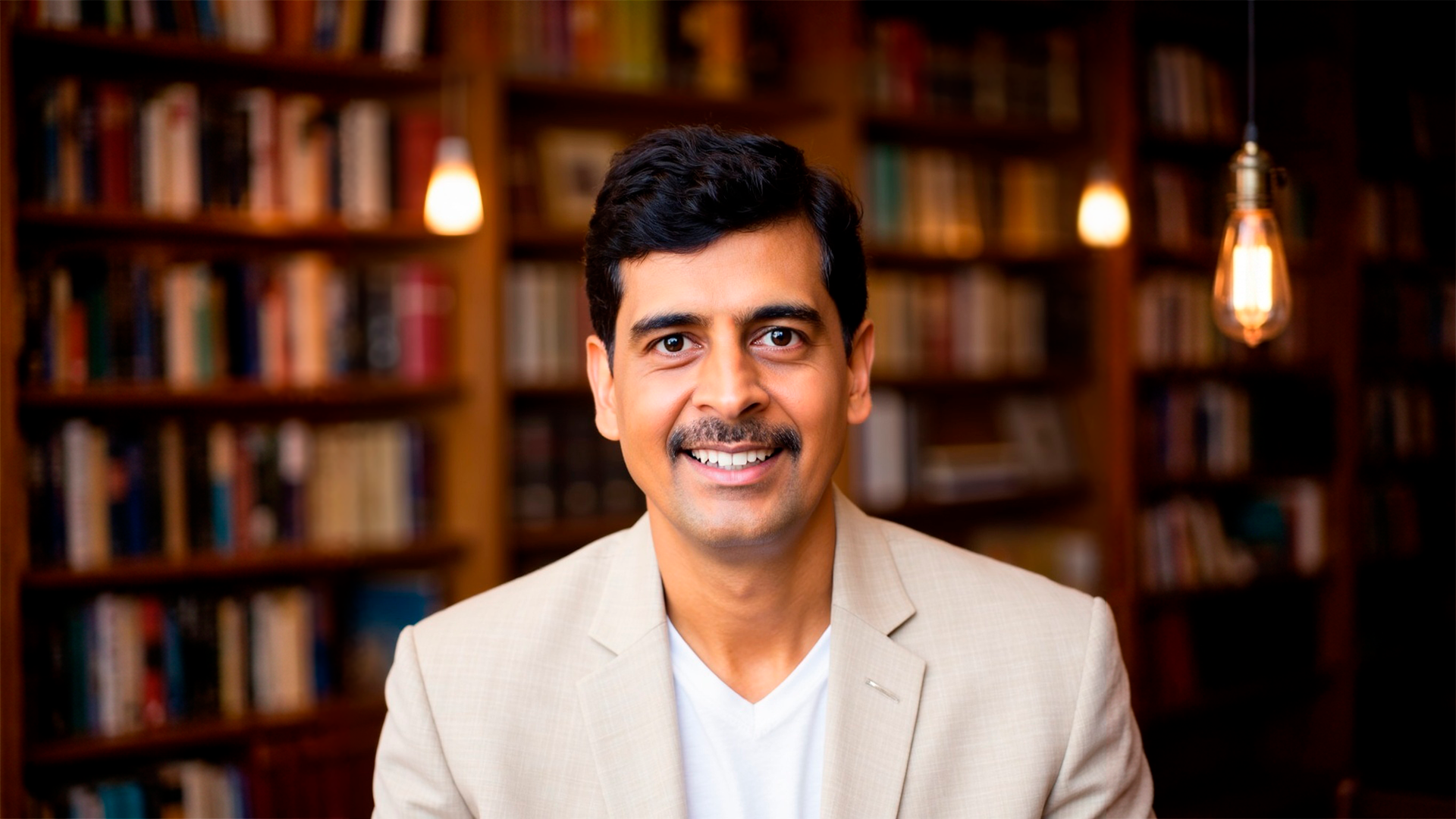

Companies deploying AI into HR are often automating the wrong layer. They point the technology at the visible cost centers, recruiting workflows, ticket queues, and performance paperwork, and treat the employee experience itself as untouched territory to be dealt with later through the usual annual survey cycle. Shashank Bhushan, a Global HR Leader at Amagi argues that this sequencing is backwards. The parts of work that determine whether people stay, and experience growth, purpose, and belonging, are precisely the parts that AI can convert from static programs into live operating systems. That conversion is where the chief human resources officer (CHRO) either earns strategic authority or forfeits it to whoever else in the organization is willing to make the design decisions.
From Annual Programs to Real-Time Systems
The three pillars Bhushan describes have historically run on calendars. Career development happens in a review cycle. Purpose gets articulated in a mission statement refreshed every few years. Belonging is measured after the fact, normally in an exit interview, when the person is already gone. AI collapses those intervals. Growth evolves from rigid linear ladders into fluid talent mobility, Bhushan says, with skill-mapping that continuously matches employees to project gigs, cross-functional mentorships, and emerging skill tracks. Purpose becomes what he calls actionable visibility: tools that connect a person’s operational tasks directly to customer outcomes and business metrics, so the impact of daily output is legible rather than asserted. Belonging shifts from reactive survey to active cultural governance, with listening platforms reading passive collaboration signals and sentiment so leaders can intervene before burnout or isolation turns into attrition.
That last capability is the one that should give executives pause, and Bhushan does not dodge it. Analyzing collaboration patterns to detect isolation is simply surveillance wearing a friendlier name – unless the organization has decided in advance what it will and will not do with the signal. His framing of the CHRO mandate is the guardrail: intelligent automation must augment human empathy rather than replace it. Read plainly, that means the system flags the pattern and a human handles the conversation. An organization that lets the algorithm own both the detection and the response has not built a culture engine. It has built a monitoring apparatus, and employees will read it that way within a quarter.
Trust is Cultural, Not Technical
The assumption inside most global rollouts is that a well-built tool travels. Bhushan’s read is that it does not, because trust in AI is fundamentally cultural. In high-context, consensus-driven environments such as Japan or Scandinavia, he says, trust requires complete transparency around algorithmic decision-making and strong privacy guardrails. In fast-paced, output-driven markets such as the U.S. or Singapore, trust comes from immediate, personalized utility that removes operational friction. Same platform, two entirely different adoption problems. A CHRO who ships one change-management playbook across both will see the tool succeed in one region and quietly die in the other, and will likely misdiagnose the failure as a training gap.
What does travel are three design principles.
- Opt-in agency, meaning employees retain clear opt-outs from AI-recommended career paths.
- Explainable logic, meaning the system shows why an opportunity was suggested.
- Human-in-the-loop governance, where AI handles process and pattern recognition, while humans retain authority over evaluation and career-defining moments.
Each of these carries a real cost: opt-outs degrade the data, explainability constrains model choice, and keeping humans in the loop on promotion decisions caps the efficiency gain the vendor promised. Bhushan is arguing those costs are the price of a system people will actually use, and organizations that treat them as optional features to add in version two are buying adoption failure at full price.
The Manager Problem is the Belonging Problem
Bhushan cites Gallup’s 2026 report showing manager engagement declining globally from 31 to 21 percent, and he treats that number as the central fact of workforce design rather than a side issue for the leadership development team. Managers, he notes, account for 70 percent of team engagement variance. They are also drowning in administrative toil: task tracking, change fatigue, and the accumulated coordination work that has quietly become the job. When the layer responsible for most of a team’s engagement is itself disengaging, no amount of culture programming above it will hold. This is where AI has its clearest and least controversial application. Automating shift scheduling, performance tracking, and resource allocation is not glamorous, but it directly attacks manager burnout by reclaiming the bandwidth that coaching, active listening, and psychological safety require. When AI restores manager capacity, then team belonging strengthens naturally, Bhushan says.
The larger structural shift he expects is human-machine teaming, and his reasoning for ranking it above skills-based models or talent marketplaces is worth sitting with. Those approaches optimize where people sit. Human-machine teaming changes how people work every hour. Integrating specialized AI agents alongside human teams alters job roles at the level of daily execution, which means organizations need new frameworks for cognitive load, workflow design, and human oversight. Very few HR functions have any of those today. Bhushan’s view is that the payoff is worth the build: firms that master this collaboration will unlock significant productivity gains, while creating a richer experience where humans focus on strategic, creative, and relational work. The design choice underneath all of it is the same one running through his entire argument. Treat growth, purpose, and belonging as linked feedback loops rather than separate HR pillars, and talent mobility starts reinforcing cultural cohesion instead of competing with it.
Follow Shashank Bhushan on LinkedIn for more insights on AI-enabled workforce transformation, employee experience design, and HR technology strategy.