
The pitch is not the problem. Most early-stage AI founders arrive at a fundraise with a compelling deck, a working demo, and a story rehearsed to precision. What they are not ready for is the 90-minute interrogation that follows, the sustained pressure designed to expose the distance between what a founder claims and what they can actually defend. Investors have seen a thousand decks this year alone. The ones who write checks are looking for a reason to stop believing.
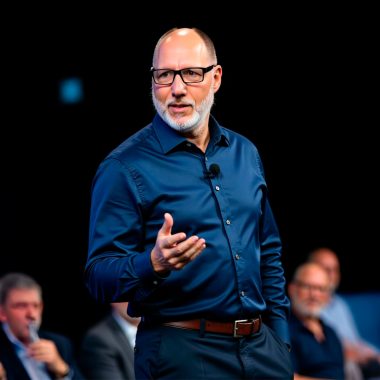
Pitch readiness and raise readiness are not the same discipline, and the founders who conflate them are losing rounds they should have won. Mark P. Beltran, Fractional Chief Financial Officer (CFO) and founder of Silicon Valley Consulting, has spent his career closing that gap for early-stage AI companies before it becomes fatal. “Investors don’t fund pitch decks,” Beltran states. “They fund founders who can defend every number under sustained pressure.”
The Valuation That Feels Like Validation
A seed valuation running 40% above non-AI peers is not a signal of market confidence. It is a forward-dated tax on the Series A, and most founders who accept it do not fully understand what they have agreed to. The growth expectations baked into an inflated valuation create an implicit bar that most founding teams, however capable, will find structurally improbable to clear in the window investors are watching. The arithmetic is unsparing even before you run the numbers.
Beltran steers clients toward an entirely different calculus.
The investors worth having — the ones who will lead a Series B or bridge a difficult quarter — care about ownership percentage, not headline multiples. A slightly lower valuation with the right lead investor, 24 months of runway, and a disciplined 3 to 4x growth plan is a stronger position than a number that impresses at announcement and becomes a trap 18 months later. “A high seed valuation with the wrong cap table,” Beltran reflects, “is a balloon mortgage at the top of the market.” Almost nobody wins from there.
The Compute Story Founders Are Telling Wrong
High GPU and compute costs make early-stage AI burn rates look alarming in isolation. The mistake is not having high costs. The mistake is either apologizing for them or obscuring them, moving compute out of cost of goods sold (COGS) and into operating expenses (OPEX) to make gross margins look better than they are. Sophisticated investors know the difference. Founders who attempt this lose credibility at precisely the moment they need it most.
Compute costs are dropping approximately 10x per year. The gross margins that look compressed at 500 customers will look materially different at 5,000. Founders who can show investors the trajectory, how the economics evolve as the customer base scales and compute prices fall, are showing them a factory being constructed, not a leaky bucket being managed. “We want investors to see the factory being produced,” Beltran insists. The current numbers are chapter one. The job is to make the full arc legible enough that investors want to fund the rest of the story.
The Diligence Bar Has Already Moved
AI agents have transformed financial planning and analysis on both sides of the table. What used to take a junior analyst a week now happens before the partner meeting — an investor’s team can ingest an entire data room, stress-test the assumptions, and arrive with a working financial model before the founder has poured coffee. The questions that follow are sharper, more granular, and harder to deflect with narrative than they were 18 months ago. Founders who relied on a story to carry them through early-stage diligence are now getting filtered out before the second meeting.
Beltran is direct about what financial readiness looks like in this environment. Real-time visibility, not quarterly snapshots. Live scenario models, not static decks. And the capability most founders are missing entirely, an understanding of the logic driving the AI agents being used on both sides of the conversation. “Calculators didn’t make math easier,” Beltran observes. “They just raised the bar for what was expected.” The same dynamic is now running through every fundraising process in AI.
The founders who recognize that now are the ones making it to a third meeting. The ones who don’t are still perfecting a pitch for a process that no longer exists, and losing rounds they should have won.
Follow Mark P. Beltran on LinkedIn or visit Silicon Valley Consulting for more insights on fractional CFO strategy, AI early-stage finance, and building the financial foundation that survives investor scrutiny.