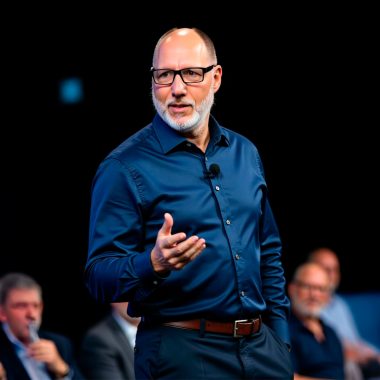

Talent acquisition (TA) has long been treated as a cost center, tucked into overhead and trimmed when budgets tighten, but that obscures its real financial impact. “When TA is a centralized, shared service providing value across the enterprise, it changes how you allocate and protect those costs,” says Victor P. Gaines, II, Assistant Vice President (AVP) of Talent Acquisition at Wellstar Health System. Rather than a fixed annual expense, talent acquisition becomes a dynamic system that scales with demand and aligns spending with actual hiring activity.
A business unit hiring at scale carries a proportionate share, while lower-volume teams are not overburdened. It also opens the door to capitalizing long-term investments such as applicant tracking systems and customer relationship management (CRM) platforms, so it improves balance sheet treatment. Perhaps most critically, classifying talent acquisition as infrastructure protects it from reactive cost-cutting. In downturns, overhead is often the first target. Infrastructure, by contrast, is recognized as essential to operations.
The Hidden Costs of Dysfunctional Hiring
The financial consequences of ineffective talent acquisition rarely appear in a single line item. Instead, they ripple across performance metrics. Gaines points to slow hiring and high attrition as parallel forces that quietly erode revenue capacity. “Both reduce the number of people available to generate revenue,” he says, while also driving up contingent labor costs as organizations scramble to fill gaps.
Knowledge loss compounds the issue. When experienced employees leave, institutional expertise walks out the door, disrupting continuity and productivity. Workforce planning becomes unstable, forcing constant recalibration. Misaligned hires introduce a different kind of cost. Poor role fit can damage team dynamics, create friction across departments, and frustrate leadership. “You end up with repeated hiring cycles,” Gaines says, each one adding incremental cost and delay. By the time they are visible, the underlying issue is often deeply embedded.
Capturing Value Through Financial Translation
For chief financial officers (CFOs), the challenge is not just recognizing these dynamics but quantifying them. Gaines emphasizes the need to translate recruiting metrics into financial terms. “If you can define the cost of a vacancy, you can calculate the value of filling a role 14 days faster,” he says. This conversion turns abstract hiring metrics into concrete financial impact.
AI-enabled recruiting adds another layer of complexity. Efficiency gains from automation often remain diffuse unless deliberately tracked. On the profit and loss statement, they appear as reduced hiring and turnover costs, alongside potential revenue gains from stronger hires. On the balance sheet, technology investments may qualify for capitalization when treated as infrastructure. Operationally, improvements show up in faster fill times, higher recruiter productivity, and lower attrition. Without a framework that links recruiting activity to financial outcomes, these gains remain invisible. With one, talent acquisition becomes measurable in the same language as other business functions.
Timing the Impact in High-Growth Environments
Talent acquisition delivers its greatest financial return in high-growth scenarios, particularly within early-stage companies scaling rapidly or preparing for major milestones. Gaines recalls working at a private equity-backed healthcare organization during the pandemic, where hiring capacity directly influenced market confidence ahead of a public offering. “Our ability to staff a tremendous volume of competitive roles was central to the company’s trajectory,” he says.
In these environments, demand for talent is high while supply is constrained. The quality and speed of hiring can determine whether strategic goals are achieved or missed. CFOs often overlook this window. Early-stage companies may lack mature HR structures, and the financial impact of hiring challenges does not immediately appear in standard reports.
Another factor is outdated measurement. A narrow focus on cost per hire can obscure the broader value of securing high-impact talent. “Focusing only on cost per hire misses the greater impact of a high-powered hire,” Gaines says. The result is underinvestment at the moment when talent acquisition matters most.
Aligning Finance and Workforce Strategy
As predictive analytics mature, integrating workforce planning into financial forecasting becomes essential. Gaines stresses the importance of tying hiring outcomes directly to business results. In a healthcare setting, faster hiring can mean opening a new clinic sooner, accelerating both service delivery and revenue generation. The same principle applies across industries.
Treating workforce data with the same rigor as financial data is a critical step. While people metrics can feel less precise, their impact is no less significant. Budgeting proactively for high-impact roles ensures that organizations do not compromise on critical hires due to short-term cost concerns.
Close alignment between finance and HR is central to this effort. “People data is messy,” Gaines says, “but when finance and HR work in lockstep, you can translate that data into meaningful financial insight.” This collaboration allows organizations to move from reactive hiring to strategic workforce investment.
A Strategic Lever for Enterprise Value
Human capital is often the largest and most valuable expense on a company’s balance sheet. Treating talent acquisition as infrastructure, rather than overhead, can reframe it as a driver of enterprise value. When finance and workforce strategy are aligned, organizations gain a clearer understanding of how hiring decisions shape performance. They can allocate resources more effectively, protect critical capabilities, and capture the full financial impact of their talent investments.
Gaines sees this alignment as a potential inflection point. “If you can harmonize how you budget, classify, and manage human capital, it can be a game changer for the business.” For CFOs, the opportunity is not just to measure talent acquisition more precisely, but to recognize it as a foundational component of growth.
Follow Victor P. Gaines, II on LinkedIn for more insights.