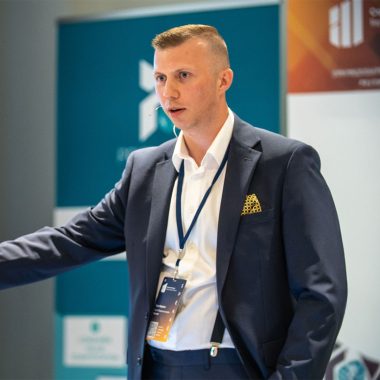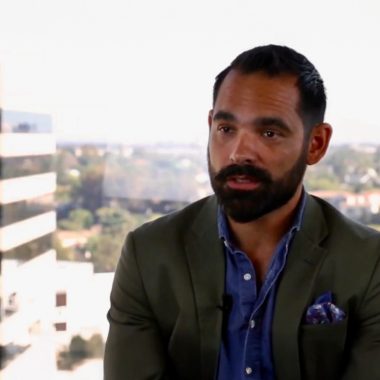

As Chief Executive Officer of The InVentures Group, Keith A. Blakely has built a career around taking technologies that appear improbable, even impractical, and turning them into commercial realities. Across a diverse number of industries including energy, transportation, telecom, biomedical, environmental, consumer products, and defense, Blakely has backed and scaled inventions that have gone on to reshape entire industries in both visible and invisible ways.
“There’s really no hard and fast rule to determine whether a technology is ultimately going to break through,” Blakely says. “But perseverance is almost always a defining characteristic of success.”
For Blakely, innovation is achieved when technical brilliance is matched with patience, discipline, and a clear-eyed understanding of economic reality. “Failing fast is easy,” he says. “The most important developments require persistence, patience, and dedication.”
Just as critical is grounding innovation in economic reality. “It’s easy to believe that elevating performance will result in customers being willing to pay more,” Blakely says. “That often isn’t the case.” Long-term success depends on aligning technical advances with clear, defensible value that holds up under real market pressure. What follows reflects how that philosophy translates into concrete decisions about timing, risk, and scale.
Knowing When Innovation Is Ready to Scale
One of the most consequential decisions founders face is when to shift focus from invention to commercialization. Move too early and resources are wasted. Move too late and opportunity narrows. Blakely relies on the Stage Gate process, a structured framework that evaluates readiness across multiple dimensions.
The process incorporates factors such as technical maturity, market assessment, quality standards, testing protocols, and validation. “What I like about it is that it brings a diverse range of opinions into the decision,” Blakely says. Rather than demanding perfection at every step, the framework highlights risk, forcing teams to confront where assumptions may not hold as investment increases.
This is particularly important for early stage companies working with physical technologies. Unlike software, where marginal costs approach zero, manufactured products demand capital, infrastructure, and time. Misjudging readiness can lock a company into expensive commitments before demand is proven.
De-Risking Without Diluting the Vision
That tension becomes most visible once capital enters the picture. Investors and strategic partners often ask for certainty long before it truly exists. The real risk, however, isn’t uncertainty itself, but pretending it can be engineered away. “You don’t want to underestimate what the difficulties are going to be,” he says, because that is where projects unravel.
Proof, not promise, is what ultimately carries innovations across the gap from concept to adoption, making prototypes one of the most effective risk-reduction tools for physical products. Early versions help to reveal how a technology behaves outside the lab and give teams something to test, break, refine, and place in front of customers who will surface objections no spreadsheet ever will. Those reactions help determine not just technical readiness, but how much capital should be committed and when.
The Double-Edged Nature of Strategic Partnerships
As technologies move closer to market, strategic partnerships can accelerate commercialization. Established partners understand scale, regulation, and distribution, and they often provide access to customers and channels that young companies cannot reach alone.
At the same time, however, financing or licensing arrangements can come with constraints that limit broader opportunity. “They can be incredibly valuable, and they can also be incredibly dangerous,” he says, warning against accepting capital out of desperation, having seen situations where funding arrived with unspoken incentives to sideline a technology.
By targeting a niche with manageable manufacturing requirements and less price sensitivity, early stage companies can generate validation and revenue while learning what it will take to scale. “Do not try to eat the elephant in a single bite,” he says.
Time Is the Ultimate Test
What ultimately separates enduring technologies from forgotten breakthroughs isn’t speed, but staying power. Adoption cycles for physical products can stretch a decade or more, testing not just balance sheets but conviction. Early stage companies must sustain funding, talent, and belief through long periods.
Blakely’s career underscores a simple reality. Commercializing the impossible is rarely about betting bigger. “Very few things go from that “aha” moment to commercial viability overnight,” he says. “It’s about staying focused long enough for the value to compound.”
Follow Keith A. Blakely on LinkedIn for more insights.