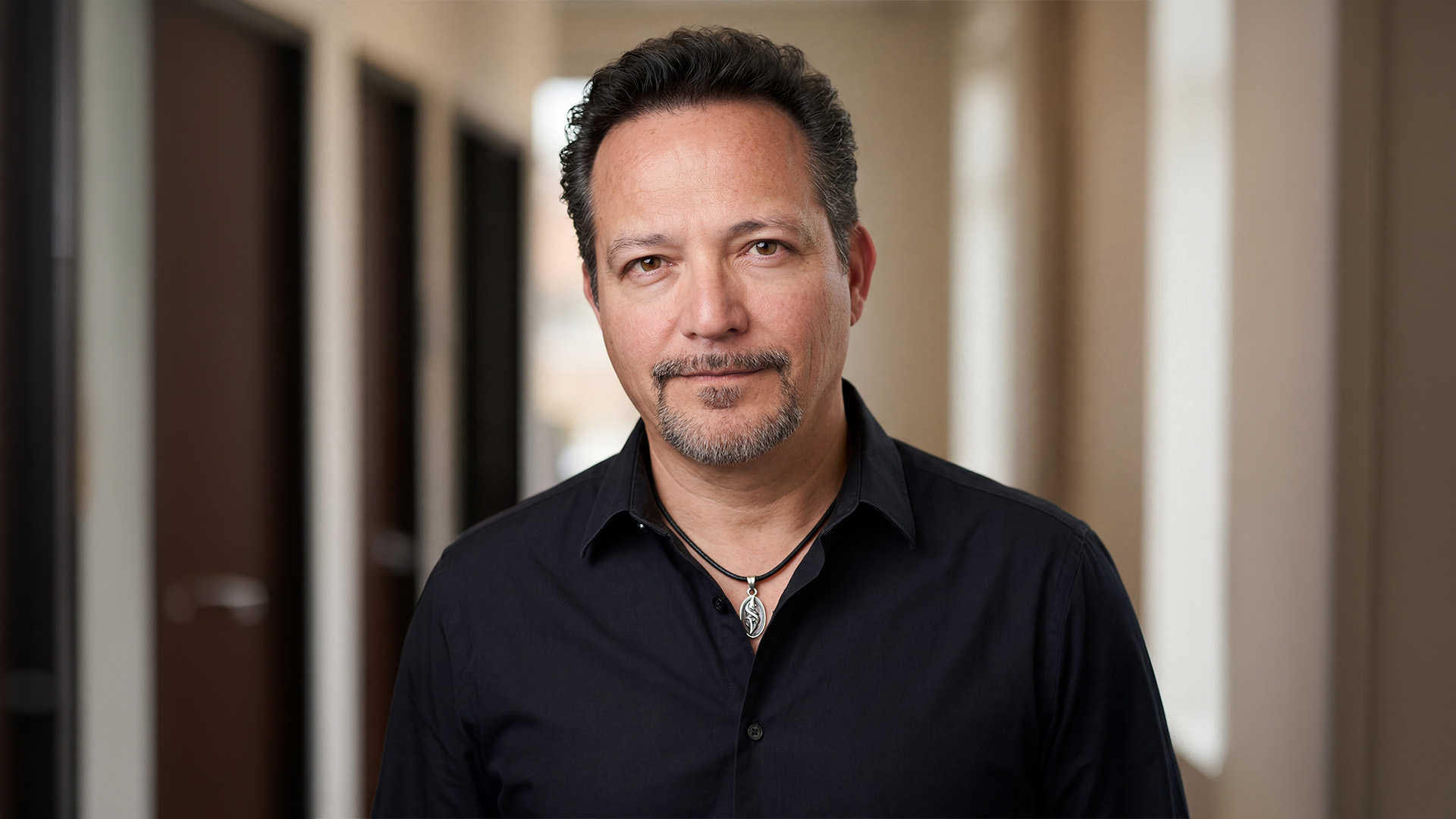

When organizations sense something is wrong with their culture, the instinct is to treat it as a culture problem. They launch initiatives, hire chief culture officers, run off-sites, and articulate values more clearly. None of it works, and Javier Castillo has spent over 20 years working across Asia, Europe, the Middle East, Latin America, and the United States, watching organizations cycle through the same failed interventions. “Culture is an outcome,” Castillo says. “It is not the problem. The diagnosis is wrong.”
Culture is the accumulated result of leadership behavior over the years. Treating it as a condition to be managed rather than a symptom of something deeper is why culture initiatives consistently fail to produce lasting change. The root causes are misalignment, incongruence, and ineffective leadership, and until those are addressed, no communication campaign or values initiative will move the needle in any meaningful way.
The System Sends Signals Leaders Cannot Override With Words
Every organizational system communicates to employees what the organization actually values, regardless of what it says it values. Performance management programs, incentive structures, and promotion decisions all send signals that employees read and respond to with perfect rationality. When those signals contradict the stated culture, employees resolve the contradiction by defaulting to what gets acknowledged.
Castillo encounters this pattern consistently across industries and geographies. Companies tell leaders they want them to develop their people and build great teams, then reward those same leaders exclusively for financial results and sales performance. The incongruence is not subtle, and leaders are rational actors. They do what the system reinforces, not what the offsite declared. “Unless you fix what you are rewarding, communicating, and reinforcing,” Castillo says, “training leaders in isolation will not produce results.”
The reason, Castillo explains, is structural. Culture is the output of six interdependent factors: purpose, strategy, operating model, organizational architecture, talent, and leadership, all working in alignment or failing to. When any of those factors pulls in a different direction, the friction becomes visible as a culture problem. But the friction was always there. Culture just made it undeniable.
This is also why delegating culture ownership to a designated role is a structural mistake. The moment culture becomes a chief culture officer’s responsibility, every other C-suite member disengages, treating it as someone else’s problem. Culture ownership belongs to the full C-suite, with the CEO bearing primary accountability. No function can fix what only leadership behavior can change.
The Universal Pattern in Every Stagnant Organization
Across two decades and multiple continents, Castillo has identified one failure that appears in every stagnant organization regardless of industry or geography. Organizations measure and recognize leaders for short-term results and execution, while holding them accountable for almost nothing else. Sustainability is rarely evaluated. Whether the team grew, whether capable people were developed, whether processes outlasted the leader’s presence: none of it factors into decisions about who is ready for greater responsibility.
Leaders either believe they will always be present to sustain their work, or they believe the organization will collapse without them. Both are illusions, and both actively undermine team development. “Companies are designed to outlast individuals,” Castillo says. “They can operate for 50, 100, 150 years. No leader lasts that long.” The true measure of leadership effectiveness is whether the team can execute and grow after the leader has gone, and that measure is almost entirely absent from how most organizations evaluate their leaders.
The Morphing Group’s research on Sustainable Success (2024) found that low and average leadership effectiveness accounts for at least a 25% loss in employee engagement. Castillo also draws on Gallup’s global data, which gives this a financial dimension that tends to sharpen executive attention. Global employee engagement fell to approximately 21% in 2024, with the estimated cost in lost productivity sitting at around $438 billion. “If CEOs understand that there is a measurable cost to poor leadership and misaligned culture,” Castillo says, “it stops being a fluffy concern and becomes a critical strategic imperative.” The numbers make that case more clearly than any value statement ever could.
The Move Most CEOs Keep Missing
Leaders can only be as effective as the system around them permits, which means fixing the individual without fixing the context simply results in leaders who revert to what the context reinforces the moment the training ends. Improving sustainable leadership requires both sides of the equation to change simultaneously. Culture does not improve through initiatives. It improves when the leaders at the top change what they recognize, what they tolerate, and what they model every single day. And the true measure of whether they did is what the organization looks like after they are gone.
Follow Javier Castillo Gil on LinkedIn for more insights on leadership alignment, organizational culture, and building executive teams that perform under pressure.
References
Gallup. (2025). State of the Global Workplace: 2025 Report. Gallup Press.
The Morphing Group. (2024). Key Findings on Sustainable Success. The Morphing Group Research.