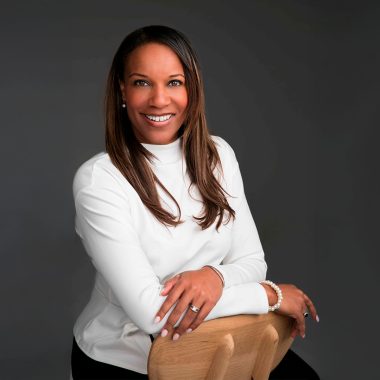

HR has spent decades asking for a seat at the table, but influence isn’t granted, it’s earned through impact. The functions that earn it stop asking and start operating like a business unit. Morolake Esi, an HR strategist and executive advisor who works with boards and senior leaders on talent strategy and organizational transformation, is direct about what that requires and why most HR functions are not there yet.
“HR leaders must see themselves as businesspeople first,” Esi says. “They need to understand the product, the market dynamics, the opportunities and threats, and be anticipating what is coming next alongside the other business leaders.”
Business Fluency is Not Optional
The gap between HR leaders who shape strategy and those who support it is not a matter of a seat at the table. It is a mindset. HR functions that wait to be invited into business conversations will keep getting invited late, after decisions have been made and implementation challenges have already been built in.
The shift requires HR to bring foresight rather than just analysis. Workforce capability gaps that will constrain the growth strategy in six months. Leadership risks visible in talent data before they surface as performance problems. Market-driven talent pressures that competitors are already responding to.
These aren’t HR issues. They are business risks and opportunities that HR is uniquely positioned to surface—and the leaders who frame them that way build a fundamentally different kind of credibility with the C-suite.
“Talent quality shows up directly in performance—productivity, speed of execution, and ultimately growth,” Esi says. “When you have the right culture, innovation accelerates. HR needs to speak that language, not the language of programs and initiatives.”
Data plays a critical role in strengthening that connection. Productivity metrics, leadership effectiveness scores, and workforce analytics that link people decisions to business outcomes give HR the same currency every other function uses to inform decisions and guide investment.
Compensation is Telling the Organization What You Actually Value
Most organizations treat pay as a retention mechanism. Esi treats it as a behavioral signal—one that communicates organizational priorities more clearly and more credibly than any values statement, culture initiative, or town hall ever will.
How pay is structured tells every employee in the organization what is actually rewarded, regardless of what leadership says is important.
Linking compensation to leadership behaviors, collaboration, and long-term value creation—rather than exclusively to short-term results—transforms pay from a cost to be managed into a tool for reinforcing strategic priorities across the organization.
“Compensation doesn’t just reward performance—it defines it,” Esi says. “You use how you structure your pay programs to show the organization what is a priority and what the performance expectations are.”
AI is the Test HR Cannot Afford to Fail
“Most organizations are focusing on access to AI. The real risk is capability—having a workforce that doesn’t know how to apply it,” Esi says.
The organizations that pull ahead over the next decade will not simply be the ones that adopt AI fastest. They will be the ones that integrate AI with their people most effectively—and that integration is as much a workforce and capability challenge as it is a technology one.
Esi positions HR at the center of this shift—not in owning the technology, but in shaping how work evolves around it. This means rethinking job design, redefining required capabilities, and ensuring the workforce is genuinely equipped to leverage AI rather than simply exposed to it.
Two talent profiles matter: AI strategists who understand the technology in depth, and a broader workforce that develops day-to-day AI fluency as a baseline expectation.
“AI won’t eliminate the need for people,” Esi says, “but it will fundamentally change the roles they play. It will partner with people to give organizations that leverage it an edge.”
The HR leaders who build for that now are helping define what high-performing organizations look like in the near future. Those who treat it primarily as a technology deployment risk staying in a more reactive posture.
HR is a business function—but its impact is most powerful when it is closely aligned to business priorities, externally informed, and able to translate people insights into actions that support performance and growth.
The leaders who operate that way, fluent in the language of the business and focused on enabling outcomes, are the ones who shape organizations. Others will continue to play an important—but more supportive—role.
Follow Morolake Esi on LinkedIn for more insights on HR strategy, organizational transformation, and building people functions that drive business performance.