
Enterprise reinvention is a massive undertaking and a defining challenge for large organizations. They face pressure to modernize legacy systems, adopt AI responsibly, manage escalating technology risk, and deliver growth under tighter economic constraints. For many enterprises, the question is how to lead transformation efforts without creating new layers of complexity or exposure.
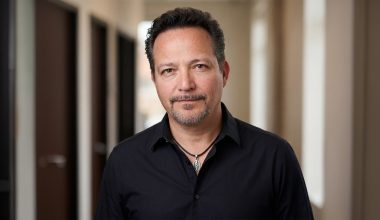
Jim Cavellier, Prior ORBIE Corporate Chief Information Officer (CIO) of the Year and CIO at Cass, says the answer lies in strategic alignment. For CIO transformation to succeed, systems, platforms, and AI governance frameworks must be anchored in a shared understanding of outcomes across the business, technology organization, and board. “The very first thing I focused on wasn’t a system or a process, it was alignment,” Cavellier says. That emphasis shaped a broader philosophy that has become increasingly relevant as CIOs face growing pressure to manage digital modernization, while strengthening cybersecurity posture, driving operational resilience, and enabling innovation delivery.
The modern CIO role increasingly centers on executive influence, board engagement, and strategic alignment across the business. At Cass – a bank holding company and leader in expense management and business intelligence – that means treating technology not as a support function, but as a lever for enterprise-wide transformation. One of Cavellier’s earliest moves was establishing a dedicated cybersecurity and IT compliance function, which elevated technology risk as a business priority rather than an isolated control function. It also reinforced a central principle shaping the CIO playbook for AI risk management and broader transformation efforts: reinvention moves faster when there is trust.
Building a Resilient IT Operating Model Through Delivery Discipline
Legacy delivery models, diffuse accountability, and oversized initiatives often slow momentum before results materialize in transformation programs. At Cass, Cavellier addresses this challenge by rethinking the structure of delivery itself. For example, instead of relying on long, sequential development cycles where projects move stage by stage over several years, he uses agile ways of working built around faster releases and continuous adjustment. Rather than pursuing large-scale programs designed to deliver everything at once, he uses a minimum viable product approach, breaking initiatives into smaller phases that deliver value sooner. “We stopped approving multi-year projects. Full stop,” Cavellier says.
That discipline is reinforced through what Cass refers to as the 2InABox model, pairing a Technology Product Owner with a Business Project Owner to create joint accountability for outcomes. This approach speaks directly to building a culture of continuous improvement in IT. It also reflects a larger shift from cost center to strategic partner, where technology teams are judged not by activity, but by business impact. The lesson for CIOs managing legacy modernization, platform consolidation, and system migration is clear. Speed comes from reducing complexity, tightening accountability, and aligning delivery to outcomes.
Aligning Technology Roadmaps With Business Strategy
Driving board-level technology decisions requires translation, but not simplification. Cavellier’s approach has been to eliminate the divide between business strategy and technology roadmap altogether. Within months of joining Cass, he introduced a five-pillar technology roadmap focused on innovation, enterprise alignment, simplification, security, and business enablement. Over time, that evolved further. In place of maintaining a separate IT strategy, technology became embedded directly into the company’s annual business planning.
“The most effective CIOs today aren’t technology advocates pitching to the business. They’re business leaders who happen to have technology as their lever,” Cavellier says. This redefines how CIOs influence C-suite decision-making and strengthens executive influence at the board level. It also reinforces what separates great CIOs from average ones. The distinction is often not technical expertise, but the ability to connect cloud enablement, vendor negotiation, talent development, and digital modernization directly to enterprise priorities. For organizations managing large-scale transformation, aligning technology roadmaps with business strategy is no longer optional. It is the foundation for sustainable change leadership.
The CIO Role in AI Adoption Depends on Governance, Not Hype
Leading technology change in the AI era has exposed a familiar divide. Many organizations have moved quickly into experimentation, but far fewer have embedded AI into operating models in a scalable way. Cavellier sees the problem as architectural and organizational. “The companies winning right now aren’t the ones with the most AI. They’re the ones who have embedded it purposefully into their operating model,” he says.
At Cass, AI supports document processing, software development, and customer onboarding, but within bounded use cases supported by governance and control frameworks. Rather than treating AI as a universal solution, Cavellier emphasizes deterministic systems for core transaction processing, while using AI selectively where it improves speed, exception handling, or decision support. The approach also addresses a larger challenge facing enterprise leaders: how to modernize legacy systems safely while introducing emerging capabilities. For CIOs navigating technology risk, cybersecurity posture, and AI adoption simultaneously, governance is what makes innovation viable.
The Future of CIO Leadership
Agentic AI has raised the stakes further, forcing CIOs to confront not just automation, but accountability. “If the answer to any of those is no, you haven’t deployed a capability, you’ve introduced a risk,” he says. That perspective captures the future of CIO leadership in a reinvention economy, defined by executing technology transformation under pressure while maintaining control. That balance increasingly shapes enterprise value.
As boards demand stronger operational resilience, tighter technology risk controls, smarter IT spend, and clearer paths to innovation, the CIO role continues to expand. The mandate is no longer just modernization. It is enterprise reinvention with discipline. For Cavellier, the enduring lesson is that transformation succeeds when technology strategy, governance, and business outcomes operate as one system.
Follow Jim Cavellier on LinkedIn or visit Cass Information Systems, Inc. for more insights.