
In 2026, companies are under mounting pressure to move faster with fewer people, all while navigating constant disruption. The companies that survive this chapter of chaos will be those that have a built-in capacity to quickly adapt to the shifting environment, otherwise they will go extinct. The real question is whether organizations have intentionally designed their people strategies to keep pace with this change. Hybrid work has settled into a long-term reality, hiring has cooled, and artificial intelligence (AI) has moved beyond the pilot phase, reshaping how work gets done and how performance is measured.
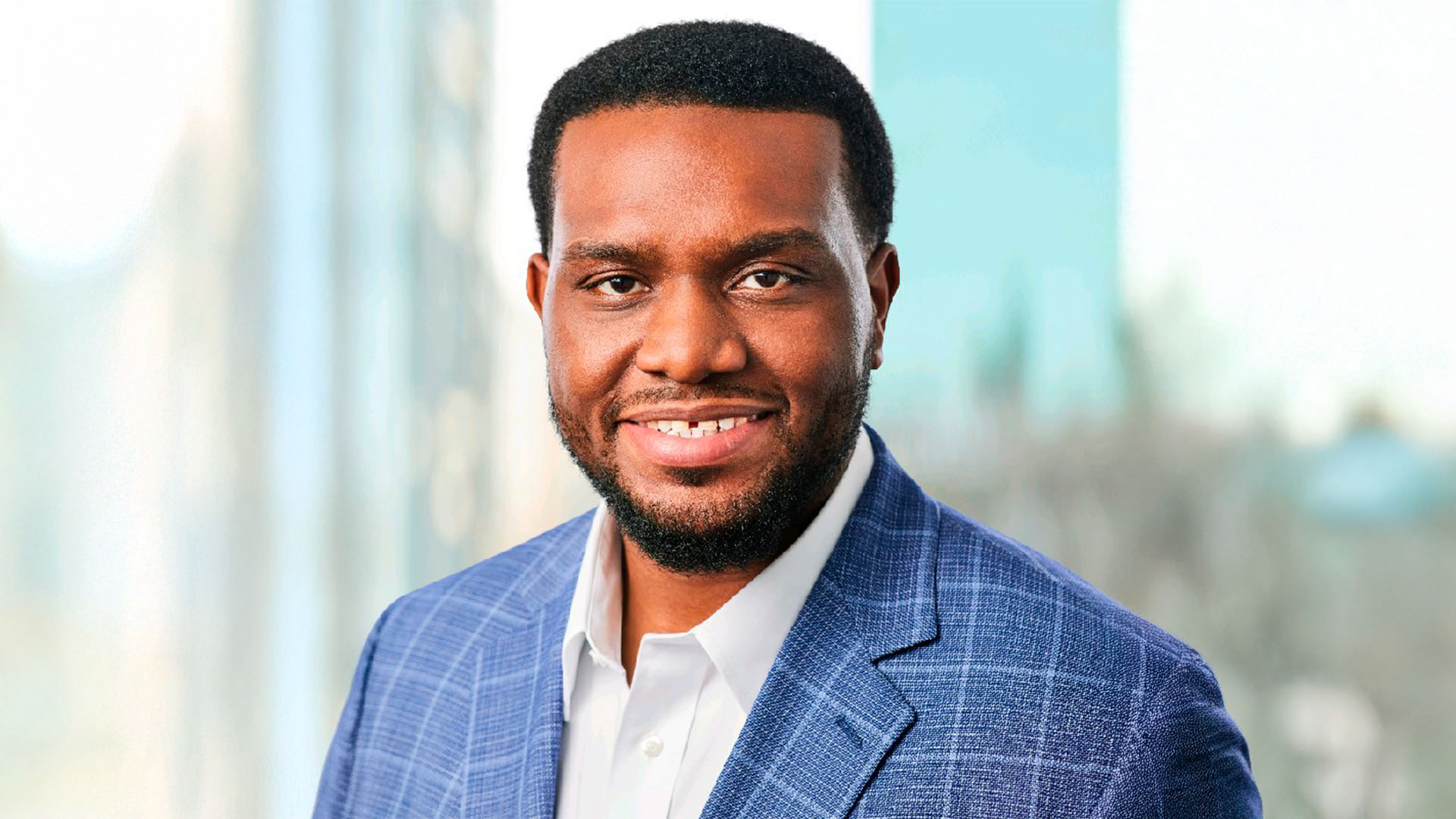
Dr. Tem Lawal, Founding Partner and CEO of Ellum Leadership Advisors, sees 2026 as a defining test for leadership teams, arguing that a strong people strategy has become the primary lever for execution. “Everything that you do as an organization has to build in constant change as part of the strategy,” Dr. Lawal says. “How do you align your organization and your people to quickly adapt and take advantage of the constant change and the opportunities that it creates?” Below, Dr. Lawal outlines five ways in which leaders should build people strategies to keep pace with disruption and sustain competitive advantage.
1. High-Performance Culture is Now The Competitive Dividing Line
One of Dr. Lawal’s clearest predictions for 2026 is that a high-performance culture will separate companies that adapt from those that stall. In the past decade, organizations weathered multiple shocks, from pandemic-driven operational shifts to geopolitical and supply chain volatility. The next shock is different because it alters the rate and nature of work itself. “Establishing a high-performance culture is going to be more critical than ever,” Dr. Lawal says. “Companies who don’t have strong performance cultures may not make it through the AI disruption phase.” More than anything, it’s a call for clarity on what outcomes matter, how decisions get made, and how work gets prioritized when resources are constrained.
Hiring is “generally flat and will likely remain that way for some time,” leading many companies to pursue growth through higher productivity rather than headcount expansion. The practical consequence is that roles broaden and collaboration becomes mandatory. “Companies have now intentionally decided to double down on executing with the people that they have,” he says. “Each employee now has expanded scope and remit to operate and execute.” For leaders, the work is to match that expanded remit with sharper goal-setting, better role clarity, and faster feedback loops. A performance culture in 2026 must be about designing the day-to-day systems that helps people deliver.
2. “Soft Skills” Are Now Critical Skills
In 2026, teams will collaborate “with robots” and humans, which changes what “good” communication looks like. As AI automates more technical tasks, Dr. Lawal expects an increased premium on the human capabilities that make execution possible across teams, such as collaborative communication, stakeholder management, and alignment. In a way, it’s a paradox. The more powerful the technology becomes, the more essential interpersonal skills are to coordinate it. “Because of that, there’s going to be a higher demand for collaboration and soft skills,” Dr. Lawal says. “The ability to manage stakeholders and to align stakeholders towards ideas, to get buy-in, to get alignment, that is going to be the make or break skill for many people.”
For early-stage companies, this really comes down to being able to move quickly while staying aligned across teams. For larger organizations, it’s more about staying competitive as things shift. In both cases, product, engineering, sales, and customer success are often working with incomplete information and timelines that keep changing, so alignment doesn’t just happen on its own, especially in hybrid setups. That has a direct impact on hiring too. Focusing on pedigree alone isn’t enough anymore. What tends to matter more is how well someone can influence, adapt, keep learning, and operate when things aren’t fully defined.
3. Companies Building Talent Change Reflexes
One talent development shift he expects is a move away from long, fixed development programs toward just-in-time support. “Rather than having dedicated nine-month programs for leadership development, things are going to be very much in the moment,” he says. “I’m currently going through a specific challenge and I need resources to help me to get through this moment.”
Dr. Lawal describes the modern operating environment using the VUCA framework: volatility, uncertainty, complexity, and ambiguity. The point is not that change is happening, but that the pace of change has accelerated beyond the traditional planning cycle. “Gone are the days where you could have a three-year plan and just execute the plan and run the playbook,” he says. “Your plan has to build in constant change. Companies are shifting and needing to shift towards building change, resiliency and change reflexes within their organizations.” Practically, that can include embedded coaching, short learning sprints, and systems that deliver real-time guidance. The common thread is speed. Employees need answers, feedback, and context when decisions are being made.
4. People Strategy Is Now a Competitive Constraint
Having led people strategy inside large, complex organizations and later applying those lessons to early-stage companies, Dr. Lawal has seen firsthand how talent decisions can limit a company’s growth potential. At FedEx and Gartner, he saw ambitious growth plans repeatedly collide with an overlooked question: who will lead the work?
“Each time we pursued a new business goal or tried to gain market share, the question was always whether we had the right people in-house to lead the effort,” Dr. Lawal says. “If the answer was no, the challenge immediately became a talent issue.” In an early-stage company, the margin for error is even thinner. “Each hire is that much more fundamentally impactful to the business success,” Dr. Lawal says. “There’s just no room for slack or to miss the mark on those things.” The lesson for business leaders preparing for growth in 2026 is that a people strategy must be elevated from a support function to a core driver of execution and resilience.
5. From AI-Assisted to AI-Led
The final shift Dr. Lawal highlights is the transition from AI as a tool employees use to AI as an operating layer that actively drives work. “We’re making the shift from AI-supported to AI-led in this year,” he says. He points to changes already emerging, such as AI-led recruiting screens, teams that replace headcount with AI agents, and “employees having AI co-workers.” This is where many leaders will misstep, either by overestimating what AI can replace or underinvesting in the human systems that make AI productive.
“AI can’t necessarily replace a lot of the IP and intellectual capabilities that skilled experts can have,” he says, adding that the strongest use case for AI is “streamlining and enhancing the capability of a skilled employee.” He also predicts hiring norms will keep shifting as AI becomes part of the baseline skill set. “I call AI the great equalizer,” he says. The candidate who can use AI to close knowledge or experience gaps may be better positioned for the modern workplace than someone who refuses to adapt.
For leaders heading into 2026, the takeaway is about redesigning the people system, performance expectations, collaboration norms, and change readiness. AI may accelerate the pace of work, but the companies that endure will be the ones that keep their teams aligned, resilient, and accountable.
Follow Dr. Tem Lawal on LinkedIn for more insights.